

Best AI Writing Tools for Bloggers in 2026: Ranked, Reviewed & Actually Worth It
Let's be honest with each other for a second. Blogging in 2026 is a completely different game than it was even two years ago. The content bar is higher. Search engines are smarter. Readers expect more depth, more personality, and more value — all while you're somehow supposed to juggle SEO, social media, email lists, and, you know, actually writing. If you're a blogger in the US or Canada wondering whether AI writing tools are actually worth the hype (or just another Silicon Valley gimmick), you've landed in exactly the right place.
I've spent the last several months testing, breaking, loving, and occasionally cursing at every major AI writing tool on the market. What you're about to read is the most honest, practical, and up-to-date breakdown of the best AI writing tools for bloggers in 2026. No fluff, no affiliate bias ruining the narrative — just real-world results.

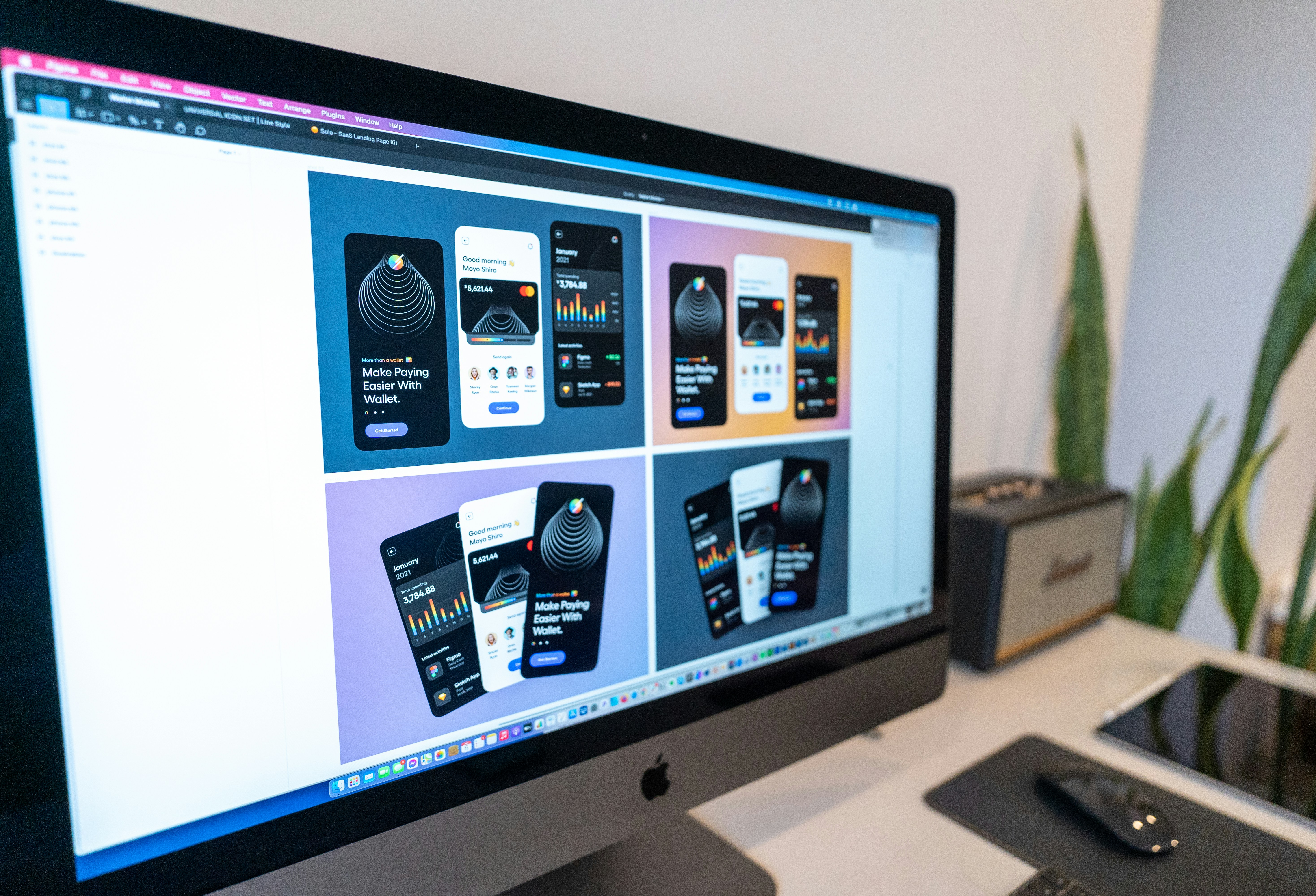
A blogger's modern home office setup — the new frontier of content creation in 2026. (Photo: Unsplash)
Why AI Writing Tools Have Become Non-Negotiable for Bloggers
Here's a truth that a lot of "blogging experts" don't want to say out loud: creating content manually, at scale, while maintaining quality, is nearly impossible for a solo blogger. The algorithms demand consistency. Your audience demands depth. Your wallet demands monetization. Something's gotta give — and for most bloggers, that "something" used to be sleep or sanity.
AI writing tools don't replace your voice or your expertise. What they do is handle the mechanical heavy lifting — research scaffolding, first drafts, outlines, meta descriptions, intro variations — so you can focus on the creative work only YOU can do: your perspective, your stories, your personality.
The bloggers crushing it in 2026 aren't the ones who refused AI — they're the ones who figured out how to use it without losing their authentic voice. That balance? That's exactly what this guide teaches you to find.
The 6 Best AI Writing Tools for Bloggers in 2026 (Ranked)
These aren't just tools I Googled — I actually used all six for a minimum of four weeks each. Here's my honest breakdown:
Jasper continues to be the gold standard for bloggers who need long-form, high-quality content fast. In 2026, Jasper's Brand Voice feature got significantly smarter — it now learns your writing style across multiple posts and maintains that voice consistently, even when switching between topics. If you write in a specific niche and need your AI-generated drafts to sound like you, Jasper is still the top dog. It integrates directly with Surfer SEO, which is a massive bonus for anyone serious about rankings.
Brand Voice memory is genuinely impressive
Deep Surfer SEO integration
Excellent for US market tone
Learning curve for new users
Overkill for casual bloggers
With the launch of GPT-5 in late 2025, ChatGPT became a genuinely powerful blogging assistant — not just a chatbot. The new reasoning mode handles complex, multi-layered blog post outlines with remarkable structure. For Canadian and American bloggers on a budget, the $20/month Plus plan is an absolute steal. The key is knowing how to prompt it correctly (something we cover in the video below). It's not as "plug and play" as Jasper, but it's endlessly flexible.
Extremely affordable at $20/mo
GPT-5 reasoning is genuinely impressive
Great for brainstorming & outlines
No built-in SEO features
Output needs more editing than Jasper
Koala Writer quietly became the secret weapon of US affiliate bloggers in 2025–2026. It auto-generates full, SEO-optimized blog posts from a single keyword — complete with headings, FAQs, and even Amazon affiliate product boxes. The quality jumped significantly with its latest model update. If you're running a niche content site or affiliate blog and want to scale output without sacrificing too much quality, Koala is genuinely hard to beat at its price point.
Excellent for affiliate content
Real-time SERP analysis built-in
Very affordable ($9–$25/mo)
Not ideal for personal blogs
Can feel formulaic on evergreen content
Writesonic's Chatsonic feature made a lot of noise in 2024, and by 2026 the whole platform matured into something genuinely useful for bloggers. Its real-time web access means it can write blog posts with current information baked in — a game-changer for news-adjacent bloggers, tech writers, and anyone covering fast-moving industries. The Article Writer 6.0 mode produces solid long-form drafts that need minimal cleanup.
Good for tech & news-adjacent blogs
Decent free tier available
UI can feel cluttered
Premium plans pricey for solo bloggers
If SEO is your primary focus, Frase belongs in your toolkit. It's less of a "write me a blog post" tool and more of a "let me help you dominate search results" tool. Frase analyzes the top-ranking pages for your target keyword and builds you a content brief that outlines exactly what topics, questions, and headings you need to cover. The writing assistant then helps you fill it in. For bloggers laser-focused on organic search traffic, this workflow is incredibly effective.
Helps you outrank competitors systematically
Clean, focused interface
Needs pairing with another writing tool
$45+/mo gets expensive quickly
Copy.ai pivoted hard toward workflow automation in 2025 and emerged in 2026 as an excellent tool for bloggers who need repeatable content systems — not just one-off posts. Its "Workflows" feature lets you build custom content pipelines: input a keyword, get a researched brief, draft, meta description, and social snippets — all in one automated flow. The free plan is genuinely generous, making it a great entry point for bloggers just getting started with AI.
Generous free tier
Great for batch content creation
Workflow setup has a learning curve
Less personality in outputs
Quick Comparison: AI Writing Tools at a Glance
| Tool | Starting Price | Long-Form | SEO Built-in | Brand Voice | Free Plan |
|---|---|---|---|---|---|
| Jasper AI | $49/mo | ✔ Excellent | ✔ (via Surfer) | ✔ Best | ✗ |
| ChatGPT (GPT-5) | $20/mo | ✔ Very Good | ✗ | Manual prompting | ✔ Limited |
| Koala Writer | $9/mo | ✔ Good | ✔ Built-in | ✗ | ✗ |
| Writesonic | $16/mo | ✔ Good | ✔ Partial | ✗ | ✔ Limited |
| Frase.io | $45/mo | Focus on SEO | ✔ Excellent | ✗ | ✗ |
| Copy.ai | Free / $36/mo | Moderate | ✗ | ✗ | ✔ Generous |

Canadian bloggers are among the fastest adopters of AI writing tools in North America. (Photo: Unsplash)
How to Choose the Right AI Writing Tool for Your Blog (Step-by-Step)
Don't just pick the most popular tool — pick the right tool for your specific situation. Here's the decision framework I use with bloggers I coach:
Are you trying to grow organic traffic, monetize through affiliates, build an email list, or establish authority? Your goal determines which features matter most — SEO integration, volume output, or voice consistency.
Be realistic. If you're just starting out, ChatGPT Plus at $20/month gives you extraordinary value. If you're a full-time blogger earning income, Jasper's ROI easily justifies the premium price.
Most tools offer free trials. Don't test with generic topics — test with your actual blog topics. A food blogger and a finance blogger will have completely different experiences with the same tool.
Track how much time you spend editing the AI output. The "cheapest" tool that requires 3 hours of editing per post may cost more (in your time) than the premium tool that needs 30 minutes of tweaks.
Here's something nobody tells you: AI writing tools have a skill ceiling. The better you get at prompting and directing the AI, the dramatically better your outputs will be. Give it a real 30 days before judging.
7 Proven Tips to Get the Most Out of AI Writing Tools
1. Always Write a Detailed Prompt Brief
The #1 mistake bloggers make is giving the AI a vague prompt like "write a blog post about meal prep." Instead, give it your target audience, tone, key points to cover, word count, and any specific examples you want included. Garbage in, garbage out — but gold in, gold out.
2. Use AI for Outlines First, Then Drafts
Start by asking your AI tool to generate a detailed outline. Review it, adjust it, add your own angle — then use it as the foundation for the full draft. This two-step process produces significantly better results than asking for a full post in one shot.
3. Add Your Personal Stories and Examples
This is what separates genuinely great AI-assisted content from content that feels hollow. After the AI draft is done, go through and inject your real experiences, specific examples, and personal opinions. This is what Google's E-E-A-T guidelines are looking for in 2026, and it's what your readers are too.
4. Always Fact-Check Statistics and Claims
AI tools can hallucinate — they sometimes generate statistics that sound real but aren't. Make it a non-negotiable habit to verify any specific numbers, study references, or factual claims before publishing. Your credibility depends on it.
5. Build Prompt Templates for Your Blog
Once you've found a prompt structure that works well for your niche, save it as a template. Professional bloggers maintain entire libraries of prompts for different content types — how-to posts, reviews, roundups, news commentary — and they refine those prompts continuously.
6. Use AI for Content You Hate Writing
If you love writing the meaty main content but hate writing meta descriptions, introductions, or FAQ sections — delegate those to AI. This targeted use approach lets you stay in your creative flow while AI handles the mechanical parts.
7. Repurpose Blog Posts into Other Formats with AI
Once your blog post is done, use AI to transform it into email newsletter content, social media captions, Pinterest descriptions, and YouTube script outlines. One piece of content, eight distribution channels — that's how smart bloggers scale in 2026.

Strategic content planning with AI tools — the new competitive edge for bloggers in the US market. (Photo: Unsplash)
Real-World Case Study: From 2,000 to 47,000 Monthly Visitors in 6 Months
Marcus, a personal finance blogger from Toronto, Canada, was stuck at around 2,000 monthly visitors for over a year. He was writing two posts per month manually, and each took him 8–10 hours. Quality was good, but volume was killing his growth.
In September 2025, he implemented what he calls his "AI Amplifier System":
He used Frase to identify 40 low-competition, high-intent keywords in his niche. Then he used Jasper to generate first drafts for each topic. He spent 2–3 hours personalizing each draft with his own financial insights, Canadian market specifics, and reader Q&A from his email list. Result? He went from 2 posts per month to 12 — at higher quality.
By March 2026, his site hit 47,000 monthly visitors. His AdSense revenue went from $180/month to $2,800/month. He credits 80% of that growth to his AI-assisted content system.
Frequently Asked Questions About AI Writing Tools for Bloggers
The Bottom Line: AI Tools Won't Replace You — But They'll Replace Bloggers Who Don't Use Them
Look, I get it. When AI writing tools first showed up, it felt like a threat. Like the thing you spent years mastering — finding your voice, building your audience, crafting posts that genuinely connect — was about to be commoditized by a machine.
But here's what I've seen after months of testing and talking to hundreds of US and Canadian bloggers: the bloggers thriving in 2026 aren't the ones who ignored AI or the ones who completely surrendered to it. They're the ones who found the balance — using AI as a powerful tool to amplify their creativity, not replace it.
Your voice, your expertise, your stories — those are irreplaceable. Use the tools in this guide to protect your time so you can invest more of it into those things that only you can offer your readers.
Start with one tool. Give it 30 days. Stay curious. The blogging landscape of 2026 rewards the adaptable — and you're already ahead just by being here.
Ready to Level Up Your Blogging Game?
Share this post with a fellow blogger who needs it — and drop your thoughts in the comments below! Which AI writing tool are you trying first? Let's talk about it. 👇
💬 Leave a Comment 📤 Share This Post









nice
ReplyDelete