
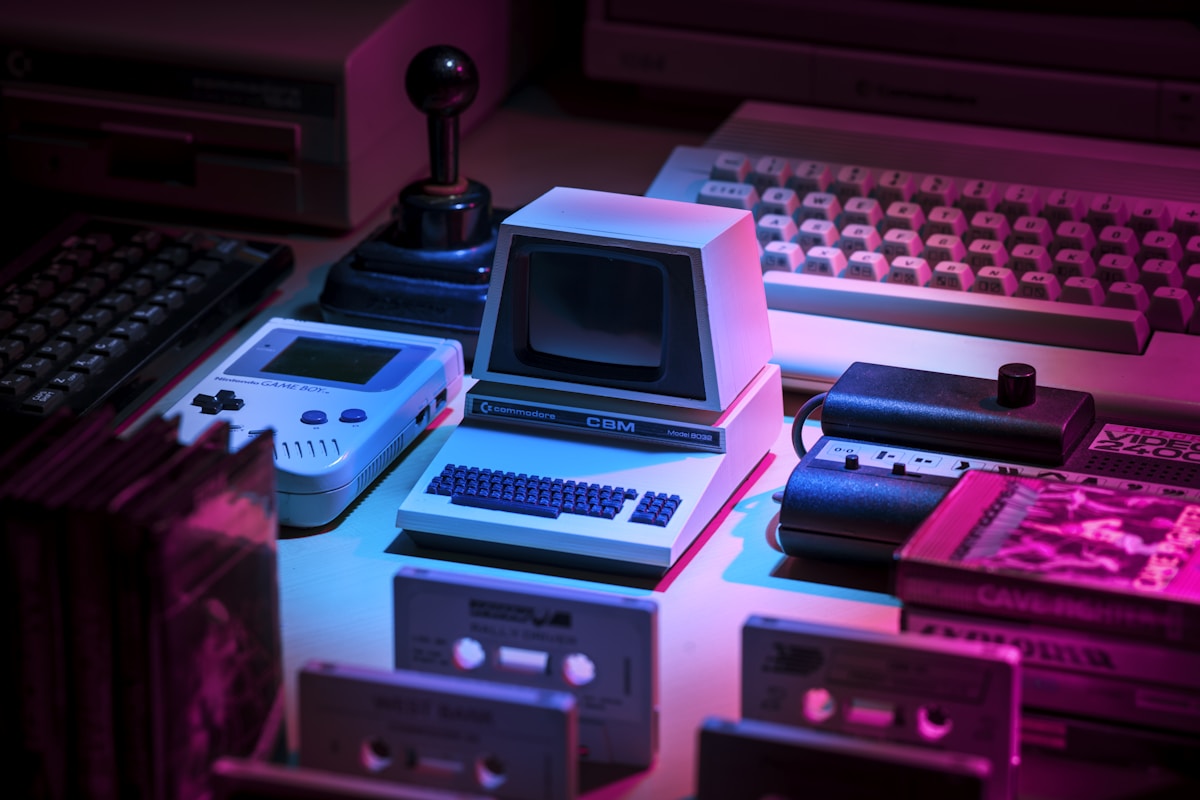
Leonardo.ai: The Hidden Gem That Beats Midjourney for Game Assets
⚡ Quick Answer
Leonardo.ai review from a game developer who spent 60 days using it for game art production. Why it beats Midjourney for consistent character and asset generation, and where it falls short.
Get more content like this on Telegram!
Daily AI tips, notes & resources — free
Advertisement
Leonardo.ai: The Hidden Gem That Beats Midjourney for Game Assets
Every indie developer I know uses Midjourney or DALL-E 3. When I mention Leonardo.ai, I usually get a blank look.
That's surprising, because for the specific problem of generating consistent game assets — characters, environments, props, and sprites that look like they belong in the same game — Leonardo.ai is significantly better than either.
I spent 60 days using Leonardo.ai as the primary art tool for a mobile game prototype. Here's what I found about why it beats Midjourney for game production work, where it still falls short, and who should be using it.
Why Game Art Has Different Requirements
Before the tool comparison, it's worth understanding what makes game art different from general AI image generation:
Consistency is everything. A photorealistic portrait from Midjourney is impressive as a standalone piece. A game character needs to look the same across dozens of frames, poses, and contexts. Midjourney produces beautiful images; it doesn't produce consistent characters.
Style lock matters. All assets in a game need to share a visual style. Mixing photorealistic and painterly or cel-shaded elements in one game looks broken. You need a tool that can maintain a specific aesthetic across hundreds of asset generations.
Technical specs. Game assets often need: transparent backgrounds, specific aspect ratios, consistent sizes, and clean edges. The "beautiful mess" aesthetic that makes Midjourney images stunning as art makes them unusable as production assets.
Leonardo.ai was designed with these requirements in mind.
Leonardo.ai's Key Features for Game Art
Fine-Tuned Art Models
Leonardo.ai includes specialized fine-tuned models pre-optimized for different art styles:
- Leonardo Game Assets — sprites, props, and items in RPG style
- Leonardo Anime XL — consistent anime-style character art
- Pixel Art — dedicated pixel art generation
- 2D Game Assets — isometric and top-down game asset styles
- DreamShaper XL — versatile concept art
- PhotoReal — photorealistic images when needed
These models reduce the prompt engineering required to achieve specific styles. Where Midjourney requires complex style prompts and often produces inconsistent results, Leonardo's specialized models lock in an aesthetic from the first generation.
Image Guidance for Character Consistency
This is Leonardo.ai's killer feature for game developers. Upload a reference image — your character design, a style reference, an existing asset — and use it to guide new generations.
My workflow for the prototype:
- Generated an initial character design I liked
- Set that as my Image Guidance reference
- Generated 30+ variations: different poses, expressions, equipment, damage states
All 30 generations looked like the same character. In Midjourney, getting consistent character appearance requires complex prompt engineering and still produces variable results.
AI Canvas (In-Context Editing)
Leonardo's AI Canvas works similarly to Photoshop's Generative Fill — you can paint over specific areas and regenerate just that region, or extend the canvas. For fixing generated images without starting over, this saves significant iteration time.
ControlNet Integration
Like Stable Diffusion, Leonardo.ai integrates ControlNet for composition control. Feed it a pose reference image and it generates new art matching that pose — essential for game character animation reference sheets.
The 60-Day Prototype: Real Results
My mobile game prototype needed:
- 1 player character (8 directional movement sprites, 4 animations each = 32 images)
- 12 enemy types (front-facing sprites + attack frames)
- 20 environment props (trees, rocks, structures)
- 3 background tileable environments
Previous project: I hired a contractor for the equivalent art package. Cost: $2,800. Time: 6 weeks.
With Leonardo.ai:
- Player character: 4 hours (3 for generation, 1 for cleanup/export)
- Enemy characters: 8 hours total
- Props: 3 hours
- Environments: 5 hours
- Total cost: $0 (used free tier for concept exploration, upgraded to $12/month for production)
Quality comparison: The Leonardo.ai assets look like a coherent art style, which is what matters. Individual asset quality isn't as high as a skilled human illustrator, but consistency across the set is actually better because every piece comes from the same generation model.
Leonardo.ai vs. Midjourney for Game Assets
I ran the same character briefs through both tools for comparison:
| Criterion | Leonardo.ai | Midjourney v6 |
|---|---|---|
| Character consistency across generations | Excellent | Variable |
| Game-optimized art styles | Excellent (dedicated models) | Good (requires prompting) |
| Transparent background support | Yes | No (requires editing) |
| ControlNet/pose guidance | Yes | No |
| Pixel art capability | Yes | Limited |
| Overall artistic quality (standalone) | Very good | Excellent |
| Free tier | Yes (150 tokens/day) | No |
| Pricing | $12–$60/month | $10–$120/month |
For game art production: Leonardo.ai. For standalone artistic output: Midjourney.
Where Leonardo.ai Falls Short
Raw image quality ceiling. Midjourney v6's standalone image quality is still higher. If I need a single stunning piece of concept art, Midjourney produces more impressive results. Leonardo.ai's strength is production consistency, not peak artistic quality.
Token economics. The credit system can be confusing — different models use different token amounts. High-resolution generations with premium models drain credits quickly. The free tier (150 tokens/day) doesn't go far in active production use.
Learning curve. The interface has more options than Midjourney, which can be overwhelming. Model selection, Image Guidance settings, ControlNet configuration, and Canvas tools all require learning. Budget a week of exploration before production use.
Prompt sensitivity. Some fine-tuned models respond differently to standard prompts compared to base models. You'll spend time learning which prompt approaches work best with each specialized model.
Getting Started With Leonardo.ai
- Create a free account at Leonardo.ai — you get 150 tokens/day without a credit card
- Start with the Leonardo Game Assets or DreamShaper XL model for your first generations
- Try the same prompt across 3–4 different models to see how each interprets it
- Generate a character reference you like, then use Image Guidance to produce variations
- Experiment with ControlNet by uploading a simple stick figure sketch as a pose reference
Further Reading
- Adobe Firefly Review: Is It Worth It for Creative Professionals?
- How to Turn QR Codes Into Art Using Free AI Tools (2026)
- 10 Prompts for AI-Generated Food Photography That Looks Real
- How to Create AI-Generated Memes That Actually Go Viral (2026)
- How to Generate Product Photos for Shopify Using AI (2026)
- 50 Best Free AI Tools in 2026 That Are Actually Worth Your Time
- Claude AI vs ChatGPT for Long-Form Writing: Honest Comparison 2026
- The ChatGPT Prompt Bible: 200 Prompts for Every Job and Industry
Advertisement
💬 DiscussionPowered by GitHub Discussions
Frequently Asked Questions
AiTechWorlds Team
✓ Verified WriterThe AiTechWorlds team is passionate about AI, technology, and education. We create high-quality, research-backed content to help you learn, grow, and succeed in the modern digital world.
Advertisement
Related Articles
How to Create AI-Generated Album Cover Art (Free Tools 2026)
Learn how to create AI album cover art for free using top tools in 2026. Genre-specific prompts, Spotify specs, and real tool comparisons inside.

5 AI Image Generators Specialized in Anime Style (2026)
Find the best AI anime generator for 2026. Compare NovelAI, Waifu Diffusion, Leonardo, and more with real accuracy tests and free tier details.
How to Generate Architectural Renders With AI (No CAD Required)
Create stunning AI architectural rendering without CAD software in 2026. Compare Midjourney, Veras, and more with real workflow steps and cost breakdowns.
How to Generate AI Art in Different Styles (Cubism, Impressionism, More)
Master AI art style transfer with 15 art movement modifiers for Impressionism, Cubism, Surrealism, and more — with tool comparison and art history context.