
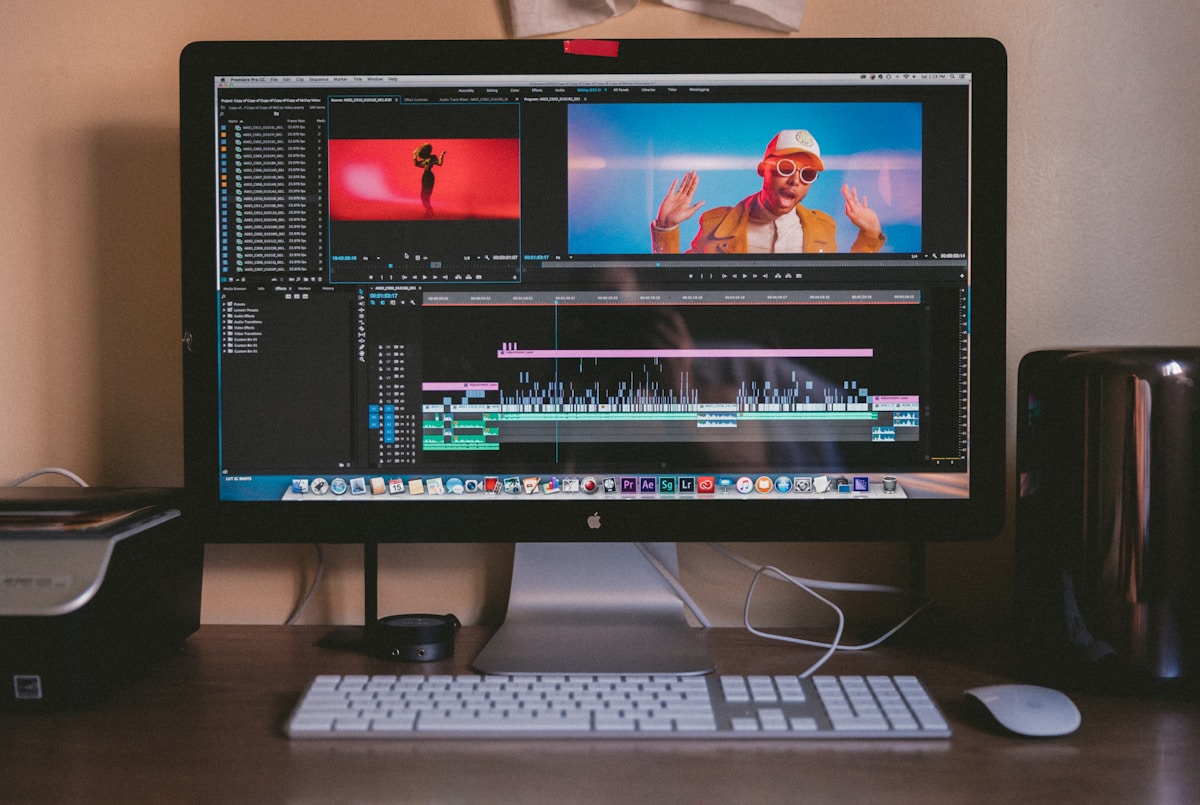
How AI-Generated Captions Boost Video Retention (With Tools)
⚡ Quick Answer
AI caption generator video tools can increase watch time by up to 80% — here's the retention data and the tools that deliver it most reliably.
Get more content like this on Telegram!
Daily AI tips, notes & resources — free
Advertisement
I added captions to my YouTube videos about two years into running the channel. My average view duration went up by 23% in the next 60 days. I hadn't changed anything else — same posting frequency, same video length, same topics.
I don't present that as a controlled experiment. There are always other variables. But it matches what the research shows, and it matches what practically every content creator I've talked to reports when they switch from no-caption to AI-generated captions.
Captions aren't just an accessibility feature anymore. They're a retention tool.
This guide covers why the retention data is compelling, which AI caption tools deliver on the promise, and how to choose between animated and static captions for different platforms.
The Retention Data You Should Know
Let's start with the numbers that matter.
The Facebook/Verizon Media Study: In 2016, Facebook partnered with Verizon Media (then Oath) to study how captions affect video viewing behavior. The findings were widely cited and have held up over time: 85% of Facebook videos are watched with sound off, and videos with captions achieve 12% more watch time on average.
That 12% figure is particularly significant because YouTube's algorithm weights watch time heavily. A video that consistently delivers 12% more watch time accumulates a compounding algorithmic advantage over months and years.
The silent viewing reality: On mobile platforms, users often watch in public spaces, in meetings, during commutes, or in bed with a sleeping partner. Sound-off viewing is the default behavior for a significant portion of audiences, not the exception.
A 2021 Verizon study found that 69% of consumers watch video with sound off in public places. 25% watch with sound off even in private settings.
Accessibility as strategy: The Web Content Accessibility Guidelines (WCAG) recommend captions for all pre-recorded video content. Beyond compliance, accessible content reaches a broader audience — approximately 1 in 5 adults in the US has some form of hearing difficulty.
Every video published without captions is leaving this audience's watch time on the table.
The short-form platform effect: For TikTok and Instagram Reels specifically, caption presence is associated with higher completion rates. A 2023 analysis by social media analytics firm Metricool found that Reels with text overlays (which includes captions) had 15–20% higher average completion rates than those without.
The mechanism is intuitive: captions give silent viewers a reason to stay. Without captions, a silent video is just moving images. With captions, it's complete content.
The 5 Tools Worth Using
Captions.ai
Captions.ai is purpose-built for the short-form content creator audience. The mobile-first interface, the template library, and the AI features are all optimized for TikTok, Reels, and YouTube Shorts.
Upload your video and Captions.ai generates word-for-word captions synced to audio. The accuracy is strong for clear speech — typically 93–97% for standard accents and recording conditions. What sets it apart is the styling system: animated captions with word-by-word highlighting, multiple font options, color themes, and background options.
The auto-translation feature covers 60+ languages, making it particularly useful for creators targeting global audiences or repurposing content across different markets.
The mobile app is genuinely good, which matters for creators whose entire production workflow happens on a phone.
Best for: Short-form content creators, TikTok and Reels focus, mobile-first workflows.
Descript
Descript approaches captions as part of a broader transcript-based editing workflow. When you upload a video, Descript transcribes it and shows you the audio as editable text. Editing the text edits the video — delete a word in the transcript, and that section disappears from the video.
The caption generation is built into this workflow. Once you have a transcript, styling and exporting captions is straightforward.
Descript's caption accuracy is very good for professional recording conditions. The AI also handles filler word removal, which matters for captions — "um" and "uh" cluttering the caption text is visually distracting and reduces credibility.
For creators who use Descript as their primary editor (which many long-form YouTubers do), adding captions happens inside the same tool they're already in. No export-reimport workflow, no sync issues.
For a full look at what Descript does, our Descript AI review covers the platform comprehensively.
Best for: Long-form content creators, podcasters producing video, anyone using Descript as their primary editor.
CapCut
CapCut is the democratizer of this category. The auto-captions feature is free, fast, and genuinely good for the price of zero.
Import your video, tap "Auto Captions," and in 1–3 minutes you have word-for-word captions you can style and export. The accuracy is comparable to paid tools for standard speech. The styling options are extensive — CapCut offers animated caption templates that rival what you'd pay $15–$20/month for in other tools.
For shorter videos (under 15 minutes), CapCut handles the entire caption workflow in a single app, including style editing, timing adjustment, and export for different platforms.
The limitation is processing speed and reliability for very long videos (1+ hour), where CapCut can be slow or inconsistent. For short-form content, it's by far the best value option available.
For a full breakdown of CapCut's AI features beyond captions, our CapCut AI features guide covers the platform in depth.
Best for: Beginners, budget-conscious creators, short-form video (under 20 minutes).
Rev
Rev is the professional's choice for accuracy. Their AI transcription service (distinct from their human transcription service) consistently achieves the highest accuracy scores in independent benchmarks — often 97–99% for clean audio.
The workflow is different from the consumer tools above. Rev is primarily a transcription service, not a video editor. You upload video, receive a transcript file, download the SRT/VTT subtitle file, and import it into your editing software.
This extra step is worth it when accuracy is critical. Legal content, educational courses, corporate communications, and any content serving an audience where caption errors create significant problems — these use cases justify Rev's slightly higher price and additional workflow step.
The human transcription option (add-on at $1.50/minute) is also available for content where near-perfect accuracy is non-negotiable.
Best for: Educational content, corporate communications, accessibility-critical content, any use case where accuracy matters more than speed.
Zubtitle
Zubtitle is a focused, no-frills tool for creators who want captions with minimal workflow overhead. Upload video, set language, choose style, download. That's basically it.
The simplicity is the feature. Zubtitle doesn't try to be a video editor or a content strategy tool. It captions videos and exports SRT files and video files with burned-in captions.
The word-count-per-frame setting is particularly useful — you can control how many words appear on screen at once, which affects readability depending on text speed. Zubtitle also auto-reformats captions for different aspect ratios, which saves time when repurposing content across platforms.
Best for: Creators who want a simple, dedicated caption tool without extra features.
Full Comparison Table
| Tool | Auto-Caption Accuracy | Animation Style | Free Tier | Paid Price | Best Platform |
|---|---|---|---|---|---|
| Captions.ai | 93–97% | Yes, word-by-word | Yes (limited) | $15/mo | TikTok, Reels, Shorts |
| Descript | 95–98% | Basic styling | Yes (1 hr/mo) | $12/mo | YouTube, long-form |
| CapCut | 92–96% | Yes, templates | Yes (full) | Free | All short-form |
| Rev AI | 97–99% | SRT export only | No | $0.25/min | Professional, educational |
| Zubtitle | 94–96% | Yes, clean styles | Yes (6 videos) | $19/mo | Multi-platform repurposing |
Animated vs. Static Captions: Which Actually Works Better
This question comes up constantly, and the honest answer is: it depends on the platform and content type.
When Animated (Word-by-Word) Captions Win
Short-form platforms — TikTok, Instagram Reels, YouTube Shorts — are where animated word-by-word captions shine. The word-highlighting draws attention to the text, keeps viewers focused on the message, and creates a more engaging visual experience for silent viewers.
The research here aligns with creator anecdote. Word-by-word animated captions on TikTok and Reels consistently correlate with higher completion rates. When every word pops in sync with the audio, the experience feels designed for the platform's pace.
For entertainment and personality-driven content, the energy of animated captions matches the content's vibe. A static caption on a fast-cut reaction video feels out of place. Animated captions feel intentional.
When Static Captions Win
For educational content, tutorials, documentaries, and professional videos, static captions are often preferable. The reason is cognitive load — animated captions require more visual attention than static ones. When the content itself is complex and information-dense, animated captions compete with the content for attention.
A static caption, positioned consistently at the bottom of the frame, becomes invisible to regular viewers while serving the accessibility and silent-viewing audience perfectly.
Long-form YouTube videos (10+ minutes) perform better with static captions, both because the cognitive load issue is greater over long viewing sessions and because YouTube's caption styling limitations make animated captions harder to implement natively.
Platform-Specific Recommendations
TikTok: Animated, word-by-word, with a strong color pop (white text with black outline or colorful highlight backgrounds perform well).
Instagram Reels: Same as TikTok — animated captions designed for mobile viewing.
YouTube (long-form): Static, white text, bottom-center position. Use Descript or Rev for accuracy, CapCut for styling.
YouTube Shorts: Animated, similar to TikTok style.
LinkedIn video: Clean static captions. LinkedIn's professional audience responds better to clean, functional captions than visually heavy animated styles.
Course content / LMS: Static, clean, burned-in or as a separate subtitle file. Accessibility compliance matters more here than engagement styling.
The SEO Angle on Captions
Caption files (SRT and VTT formats) uploaded to YouTube are indexed by Google. The transcript content becomes part of your video's searchable metadata.
This means every word spoken in your video — if properly captioned and uploaded — can appear in search results. For educational content, tutorials, and any video where people might search for specific information, this is a non-trivial SEO advantage.
Auto-generated YouTube captions are indexed too, but they're less reliable (accuracy varies) and you can't control the formatting. Uploading your own caption file, generated with a high-accuracy tool, gives you clean text for Google to index.
For faceless YouTube channels (covered in our guide on faceless YouTube channel with AI), captions are especially important because the channel has no personal brand or face to create discovery. Everything depends on algorithmic discovery, and captions feed that algorithm.
Workflow Integration: Captions in a Multi-Platform Strategy
Most creators producing video in 2026 distribute across multiple platforms. A YouTube video becomes a Reel clip, a TikTok, a LinkedIn post, and a Twitter/X short. Each platform has different aspect ratios and different caption style expectations.
The efficient workflow:
- Edit the base video with accurate captions using Descript or CapCut
- Export the full-length version for YouTube (static captions)
- Identify 3–5 clip moments (using a tool like Opus Clip)
- Run clips through Captions.ai for platform-specific animated styling
- Distribute to Reels, TikTok, Shorts with properly styled captions for each
This workflow takes more time than posting a single version everywhere, but the retention difference between platform-optimized and generic captions is visible in analytics within a few weeks.
For broader AI video production workflows, our InVideo AI review covers a platform that integrates captioning with the full video production pipeline.
The external resource worth bookmarking for accessibility compliance specifically is the W3C Web Content Accessibility Guidelines (w3.org/WAI) — particularly WCAG 2.1 Success Criterion 1.2.2, which defines caption requirements for prerecorded audio in video.
Common Caption Mistakes That Hurt Retention
Too many words per line. More than 6–8 words on screen at once is hard to read quickly. Break long sentences into shorter caption segments even if it means the timing doesn't exactly match natural speech rhythm.
Text too small on mobile. Most viewers watch mobile video in portrait mode. Captions should be sized for a 5–6 inch screen, not a desktop monitor. Test your captions on a phone before publishing.
Wrong position for the content. Lower-third positioning is standard, but it conflicts with Instagram's interface elements (like/comment buttons). For Instagram Reels, center-lower or center positioning avoids overlap.
No styling adjustment after auto-generation. Auto-captions are a starting point. Proper nouns, brand names, and technical terms frequently get transcribed incorrectly. A 5-minute review pass before publishing catches the errors that will make you look careless.
Burning in captions that can't be turned off. For YouTube specifically, always upload a separate caption file rather than burning captions into the video. This allows accessibility users to use their preferred caption settings and allows you to correct errors without re-uploading the video.
For editing workflow tools that integrate well with caption generation, our Descript AI review and CapCut AI features guides cover the specifics of each platform's caption workflow.
Conclusion
The case for AI-generated captions is no longer just an accessibility argument — it's a retention argument backed by real data. The 85% silent-viewing statistic from the Facebook/Verizon study isn't an edge case; it's the default behavior for a substantial portion of every platform's audience.
Captions.ai and CapCut are where most creators should start, depending on budget. Rev is the right choice when accuracy matters more than speed or cost. Descript is the natural option for anyone already using it as their primary editor.
The animated vs. static question has a clear answer: match the caption style to the platform. Short-form gets animated, long-form gets clean and static.
Whatever tool you use, start using it. The retention advantage compounds over time, the SEO benefit starts immediately, and the accessibility improvement is something your audience will notice even if they never explicitly comment on it.
Advertisement
💬 DiscussionPowered by GitHub Discussions
Frequently Asked Questions

AiTechWorlds Team
✓ Verified WriterThe AiTechWorlds team is passionate about AI, technology, and education. We create high-quality, research-backed content to help you learn, grow, and succeed in the modern digital world.
Advertisement
Related Articles

How to Generate AI Cinematic Trailers and Teasers (2026)
Learn how to use AI trailer generator tools to create cinematic teasers and promos with dramatic visuals, music sync, and 3-act structure — complete 2026 guide.

Best AI for Automatic Video Color Grading (Cinema Look 2026)
Discover the best AI color grading tools for achieving a cinema look automatically in 2026. Compare DaVinci Resolve AI, Colourlab, Topaz, and more for filmmakers.

6 AI Tools to Generate Animated Explainer Videos (No Skill Needed)
Discover the best AI explainer video generator tools for 2026 — create animated explainers with voice sync and no design experience required.
6 AI Green Screen Removal Tools (No Physical Screen Needed)
Discover the best AI green screen removal tools that need no physical chroma key setup in 2026. Compare Runway, CapCut, Adobe, and more for VFX artists.