
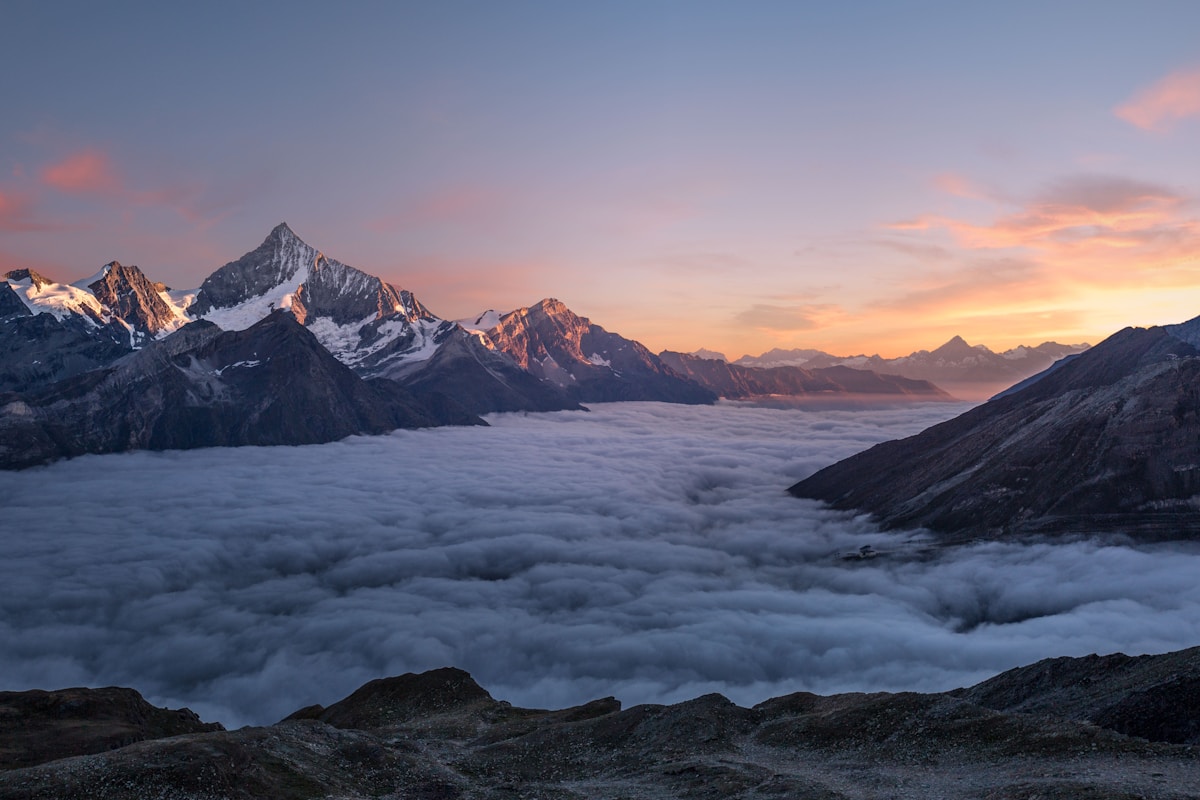
7 AI Tools for Adding Realistic Motion to Still Photos (2026)
⚡ Quick Answer
Explore the best AI photo animation tools that add realistic motion to still photos in 2026 — from Runway Gen-3 to Kling AI — with depth map techniques and free credit guides.
Get more content like this on Telegram!
Daily AI tips, notes & resources — free
Advertisement
There's a moment when you see a landscape photograph you've admired for years — perfectly composed, technically brilliant — and you wonder what it would feel like if the clouds moved, if the grass rippled, if the water flowed. That's the promise of AI photo animation tools, and in 2026 several of them are delivering on it in ways that are genuinely impressive.
I've been testing these tools extensively, and the quality range between the best and the worst is massive. Some tools produce animation that looks like living photographs. Others produce warped, melting disasters where faces contort into nightmares and buildings dissolve. The difference comes down to the underlying model architecture, the depth understanding, and the specific strengths each tool has developed.
Let me walk through what works, what doesn't, and how to get the best results from each major platform.
How Depth Maps Make Animation Feel Real
Before getting into specific tools, understanding depth maps helps you understand why some AI animations look cinematic and others look wrong.
When you look at a photograph, your brain immediately understands the three-dimensional space it represents — you know which elements are close and which are far, even though the image is flat. AI animation systems need to reconstruct this same understanding to animate plausibly.
A depth map is the AI's version of this understanding. It's a grayscale image generated by analyzing the photo, where:
- Bright (white) pixels represent objects closest to the camera
- Dark (black) pixels represent objects furthest from the camera
- Gray gradients represent intermediate distances
With accurate depth information, the animation system can apply different motion vectors to different depth layers. When you tilt a scene slightly (called a "parallax effect" or "Ken Burns effect on steroids"), closer objects shift more than distant ones — exactly as they would in real 3D space. This creates the convincing sense that you're moving through a three-dimensional environment rather than watching a flat image warp.
Modern AI animation tools estimate depth automatically from the photo using monocular depth estimation models (MiDaS, DPT, and similar architectures). The quality of depth estimation varies significantly between images:
- Works well: Clear subject-background separation, outdoor scenes with defined planes (foreground rocks, midground trees, background mountains), portraits with blurred backgrounds
- Works poorly: Complex interiors with many objects at similar depths, abstract images, heavily processed photos with artificial bokeh
Some tools (Immersity AI specifically) let you edit the depth map manually — painting areas darker or lighter to correct the AI's depth estimates. This level of control produces the best animation results when the automatic depth is wrong.
The Tool Comparison
| Tool | Motion Quality | Portrait Support | Landscape Support | Loop Support | Free Credits |
|---|---|---|---|---|---|
| Runway Gen-3 | Excellent | Very Good | Excellent | Yes | 125 credits |
| Pika 2.0 | Very Good | Excellent | Good | Yes | 150 credits |
| Luma AI Dream Machine | Very Good | Good | Excellent | Limited | 30/month |
| Kling AI | Excellent | Excellent | Very Good | Yes | 66/month |
| Immersity AI | Good | Fair | Excellent | Excellent | Free basic |
| Stable Diffusion (AnimateDiff) | Variable | Fair | Good | Yes | Free (local) |
| CapCut AI Motion | Decent | Good | Decent | Limited | Free |
Runway Gen-3: The Cinematic Standard
Runway's Gen-3 model is the current benchmark for quality in AI video generation, and it extends to photo animation. The results have a cinematic feel that other tools often lack — motion is physically plausible, lighting responds to movement, and the overall aesthetic is polished rather than digital-artifact-laden.
For landscape photography, Runway Gen-3 is genuinely remarkable. Animate a mountain lake scene and the water moves with realistic ripple physics, the light plays off the surface convincingly, and clouds drift with natural momentum. The model seems to "understand" how different materials behave in motion — water, fabric, hair, smoke all animate with distinct physical characteristics.
Portrait animation in Gen-3 is strong but occasionally produces the "uncanny valley" effect where subtle facial expression changes feel slightly wrong. The safest prompting for portraits: request minimal facial motion and focus on environmental elements (hair, clothing, background). "Hair moving in a gentle breeze, background slightly blurred and moving, subject still" produces better results than "subject turns head."
Credit costs: Runway charges credits for generation. A 5-second photo animation from a single image uses roughly 10-15 credits. With 125 free credits on signup, you have enough to test meaningfully. Paid plans start at $15/month for 625 credits.
Best use case: Professional photography portfolios, stock footage creation from existing photos, landscape and nature photography clients who want to create motion versions of their best work.
The broader Runway platform extends well beyond photo animation — the Runway Gen-2 tutorial covers video-to-video applications that complement the image-to-video work.
Pika 2.0: Portrait and Character Animation Leader
Pika has positioned itself specifically as the best tool for character and portrait animation, and their version 2.0 model makes a strong case for that claim. Face and body motion is handled more carefully than most tools — the "Pika Effects" system (including the "Inflate," "Deflate," "Crush," and "Cake" effects) shows what the model can do with human subjects.
For realistic motion rather than effects work, Pika 2.0 excels at:
- Subtle portrait animation (breathing motion, slight head movement, blinking)
- Fashion photography animation (fabric movement, hair motion)
- Pet and animal photography
The Pika Labs review goes deep on the platform's full capabilities. For photo animation specifically, Pika's strength in human subjects makes it the better choice over Runway when your primary subject is a person.
Pika's landscape animation is good but not as detailed as Runway or Luma. For non-human subjects, Runway is typically the better choice.
Loop support: Pika explicitly supports seamless loop generation — the end of the animation connects smoothly to the beginning, making it perfect for Spotify Canvas, website background videos, and social media content that plays on repeat.
Free credits: 150 credits/month on the free tier. A standard 3-second generation uses about 10 credits.
Luma AI Dream Machine: Physics-Aware Motion
Luma AI's Dream Machine is built on a fundamentally different architecture than Runway or Pika — it's designed to understand real-world physics and apply them to generated motion. This makes it particularly strong for scenes where physics matters: water, fire, smoke, fluid dynamics, objects falling or moving under gravity.
For landscape photography with water elements — coastal photography, waterfalls, lakes, rivers — Luma often produces the most physically convincing results. The water moves with real fluid dynamics rather than the texture-looping approach that many AI tools use.
The trade-off is creative control. Luma's physics-oriented approach means motion is somewhat predetermined by what physics says should happen, leaving less room for the stylized or artistic motion that Runway enables with careful prompting. You can't make water move in an artistically impossible way — Luma's model pushes back toward physical realism.
For photographers whose work involves natural environments, Luma's physics understanding is a genuine strength. For creative directors wanting precise control over motion style, Runway offers more flexibility.
Free tier: 30 generations per month on the free plan. Each generation produces a 5-second video. That's 150 seconds of monthly animation — enough for regular portfolio work without paying.
Kling AI: The Emerging Asian Market Leader
Kling AI, developed by Kuaishou Technology, has become one of the strongest contenders in the AI video space since its expanded global availability in late 2024. The quality of Kling's image-to-video is competitive with Runway on many types of shots, and on portrait/human-subject animation, some creators prefer it to the alternatives.
What Kling does particularly well:
- Maintaining subject identity across longer clips (5-10 seconds without the subject's appearance drifting)
- Handling complex clothing and fabric motion
- East Asian aesthetic sensibility that's visually distinct from the Western platform aesthetics
- Consistent face quality in portrait animation
Kling offers both a web interface and API access, with a free tier providing 66 credits monthly. Professional plans offer significantly more capacity.
For photographers who work frequently with human subjects — portrait photographers, fashion photographers, wedding photographers — Kling deserves a serious comparison against Pika. The two platforms are genuinely competitive for that use case.
Immersity AI: The Parallax Specialist
Immersity AI takes a specific approach: creating parallax-effect animations from still photos by generating depth maps and applying layered motion that creates the illusion of moving through a three-dimensional space. This is a narrower capability than tools like Runway or Pika, but for what it does, it does it well.
The platform's key differentiator is the depth map editor. You can view and edit the automatically generated depth map, painting areas brighter (closer) or darker (further) to correct depth estimation errors. For photos with complex subjects where automatic depth estimation struggles, this control produces significantly better results.
Immersity's output has a characteristic "living photograph" aesthetic — smooth, parallax-based motion that reads as "this landscape photo came to life" rather than "this video was generated by AI." It's a clean, professional look that works well for:
- Real estate photography
- Landscape and travel photography
- Editorial and documentary photography
- Spotify Canvas and looping social content
The free tier is functional for testing and occasional use. Watermark-free export requires a subscription ($10-15/month range).
AnimateDiff (Stable Diffusion): The Open-Source Option
For photographers comfortable with running local AI tools, AnimateDiff built on Stable Diffusion provides free, unlimited photo animation without cloud credits. The technical setup is significant — you need Python, CUDA, and familiarity with Stable Diffusion WebUI or ComfyUI — but the output quality with well-tuned settings is competitive with commercial tools.
AnimateDiff's advantage is customization. Because it's open-source, the community has developed hundreds of motion modules, LoRA models, and workflow configurations for specific use cases. There are specific models optimized for portraits, for realistic video, for anime-style animation, for architectural photography.
For photographers who produce volume work and want to avoid ongoing credit costs, the one-time setup effort of AnimateDiff pays off. A photographer doing 50+ animations per month would spend $50-100/month on cloud credits; running locally costs only electricity after the initial hardware investment.
CapCut AI Motion: The Mobile-Accessible Option
CapCut's "AI Motion" feature brings photo animation to mobile, which matters for photographers who work primarily from their phone. The quality is below the dedicated platforms — motion is simpler, depth understanding is less accurate — but for social media content creation directly from your camera roll, CapCut's convenience is real.
The CapCut AI features article covers everything CapCut's AI tools can do. For photo animation specifically, use CapCut when you want quick mobile content and have simple photos. Use Runway, Pika, or Kling when quality is the priority.
Practical Prompting for Photo Animation
The text prompt significantly affects animation quality. Here's what consistently works:
For landscapes: "Slow camera pull back, natural wind movement in vegetation, realistic water flow, golden hour light, cinematic quality" — gives Runway or Luma enough direction to produce something polished.
For portraits: "Subtle breathing motion, gentle hair movement in breeze, background softly moving, subject's expression stable, photorealistic quality" — keeps the face from doing strange things while adding life.
For product photography: "Slow 360-degree rotation, studio lighting consistent, product texture clear, minimal background movement" — creates the product spin content that e-commerce teams want.
For architectural photography: "Slow drone-like pull up and back, natural sky movement, stable building structure, film grain aesthetic" — leverages depth understanding to create a flying-away-from-building effect.
Avoid prompts that ask for dramatic facial expressions, fast motion, or complex multi-character interaction — these exceed current model capabilities reliably.
Use Cases and Workflow Integration
Photographers are finding AI photo animation valuable in several contexts:
Client deliverables: For commercial photographers, offering an animated version of hero images as an add-on deliverable creates new revenue. A real estate photographer charging $200 for a listing shoot can offer animated hero images for an additional $50-100, creating them in 10 minutes with AI.
Social media content: The still photo library most photographers have accumulated over years becomes a content source for animated social posts. Platforms like Instagram, LinkedIn, and Pinterest all show higher engagement on motion content than static images.
Portfolio websites: Animated photography on portfolio sites creates a more dynamic first impression. The parallax and motion effects suggest technical sophistication without requiring video production skills.
Stock footage creation: If you license photography through stock agencies, animated versions of your best images can be submitted as stock video clips. Animated nature and architecture photography sells consistently on platforms like Shutterstock and Adobe Stock.
For photographers working in contexts where full video production is relevant, check out the Topaz Video AI review for AI video enhancement tools that complement the animation workflow.
The Quality Ceiling and Honest Limitations
I want to be clear about what current AI photo animation cannot do well, because the marketing materials tend to show only best-case results.
Complex scenes with many subjects: Animating a street photograph with 20 people doesn't produce 20 people with individual, plausible motion. It produces something in between — each person partially animates, and the result often looks like a warped wax museum.
High-frequency texture detail: Very fine textures — the weave of fabric seen up close, the grain of wood, the individual blades of grass in a close-up — tend to shimmer and flicker in AI animation. This is a known artifact of current video generation models.
Long animation loops: More than 6-8 seconds of animation from a single still photo pushes current models to their limits. Subject consistency degrades, motion becomes less physically plausible, and artifacts accumulate. For longer pieces, generate shorter segments and edit them together.
Photo correction during animation: If the original photo has a flaw — overexposure in a highlight, chromatic aberration, motion blur — the AI doesn't fix it and sometimes amplifies it. Start with technically sound photos.
Building a Photo Animation Business
For photographers considering offering AI animation as a service, the economics are straightforward. Runway's $15/month Starter plan provides 625 credits — roughly 40-60 animations per month. At $50-100 per animation for commercial clients, that's $2,000-6,000 in potential monthly revenue from $15 in tool costs.
The limiting factor is client acquisition and workflow efficiency, not tool cost. Building template workflows (standard prompts for different photography categories, standard export settings for different platforms) reduces per-animation production time to 5-10 minutes for straightforward cases.
For photographers building broader AI-assisted service offerings, the Synthesia AI review and ElevenLabs review cover AI avatar and voiceover tools that can combine with photo animation for complete video content services.
What's Coming
The trajectory of AI photo animation is clear: higher resolution, longer duration, better temporal consistency, and more precise control. Several developments in late 2025 research suggest that controllable motion — being able to draw the exact path a subject should move — is coming to consumer tools within the next year.
The depth map editor in Immersity is an early example of this control direction. As tools give users more precise control over which elements move, how much, and in what direction, the quality ceiling rises and the "happy accidents" problem (where AI motion is not quite what you wanted) diminishes.
For photographers building a practice around these tools, getting in now means building skills and client relationships while the tools are still less accessible to non-technical creators. The technical barrier to good AI photo animation will keep falling.
Practical Starting Point
If you're a photographer new to AI animation, this is my suggested path:
- Try Runway's 125 free credits first — generate 5-8 animations from your best landscape work to understand what the technology does well
- Test Pika's free tier with your best portrait work — compare output quality for human subjects
- If landscape parallax is your primary use case, try Immersity AI's free tier for the depth-map-based approach
- Based on where you get the best results for your photography style, choose one platform to invest in
The tools are different enough that your specific photography style will fit one better than the others. Landscapes → Runway or Luma. Portraits → Pika or Kling. Parallax motion → Immersity. Test with free credits and let the quality of the output guide your choice.
Frequently Asked Questions
What type of photos work best for AI animation?
Photos with clear subject-background separation work best. Portraits with simple backgrounds, landscapes with defined horizon lines, and product shots with clean backgrounds all animate well. Photos with complex, cluttered backgrounds, multiple overlapping subjects, or significant depth-of-field blur can confuse motion estimation algorithms. Horizontal (landscape) photos generally animate better than vertical (portrait) ones, though this varies by tool — Pika and Kling both handle vertical photos well.
Can I use AI-animated photos commercially?
Most AI animation platforms grant commercial use rights with paid subscriptions. Check the specific terms of your platform — Runway, Pika, and Kling all allow commercial use on paid plans. Free tiers often restrict commercial use or add watermarks. If you're animating photographs you didn't take, you also need to verify that the original photo's license permits derivative works. For commissioned photography you own, there's no additional licensing concern.
How do depth maps improve AI photo animation quality?
A depth map is a grayscale image where pixel brightness represents distance from the camera — bright for close objects, dark for far objects. AI animation tools use depth maps to understand the three-dimensional structure of a 2D photo. With accurate depth information, the tool can animate foreground elements (a flower in the front) with different motion than background elements (mountains behind), creating parallax that makes the scene feel genuinely three-dimensional. Without depth information, everything moves uniformly, which looks flat.
Advertisement
💬 DiscussionPowered by GitHub Discussions
Frequently Asked Questions

AiTechWorlds Team
✓ Verified WriterThe AiTechWorlds team is passionate about AI, technology, and education. We create high-quality, research-backed content to help you learn, grow, and succeed in the modern digital world.
Advertisement
Related Articles
How AI-Generated Captions Boost Video Retention (With Tools)
AI caption generator video tools can increase watch time by up to 80% — here's the retention data and the tools that deliver it most reliably.
How to Generate AI Cinematic Trailers and Teasers (2026)
Learn how to use AI trailer generator tools to create cinematic teasers and promos with dramatic visuals, music sync, and 3-act structure — complete 2026 guide.

Best AI for Automatic Video Color Grading (Cinema Look 2026)
Discover the best AI color grading tools for achieving a cinema look automatically in 2026. Compare DaVinci Resolve AI, Colourlab, Topaz, and more for filmmakers.

6 AI Tools to Generate Animated Explainer Videos (No Skill Needed)
Discover the best AI explainer video generator tools for 2026 — create animated explainers with voice sync and no design experience required.