
The Metaverse in 2025: What Happened and What's Actually Being Built
⚡ Quick Answer
After the hype collapse, what actually survived the metaverse? An honest 2025 update on what's working (enterprise AR, spatial computing, gaming), what failed, and where immersive technology is actually heading.
Get more content like this on Telegram!
Daily AI tips, notes & resources — free
Advertisement
The Metaverse in 2025: What Happened and What's Actually Being Built
In October 2021, Mark Zuckerberg renamed Facebook to Meta and announced that the metaverse — a persistent, immersive virtual world — was the next computing platform. Over the next 18 months, Meta spent over $30 billion on Reality Labs. Horizon Worlds was supposed to have hundreds of millions of users by 2023.
It didn't happen. By late 2023, Horizon Worlds had a fraction of its projected users. The virtual office demos looked awkward. The headsets were uncomfortable for extended use. "Metaverse" became a punchline.
And yet. While the consumer metaverse narrative collapsed, something quieter was happening in enterprise environments, in gaming, and in the hardware labs at Apple and Meta. The technologies underlying the metaverse vision — AR, VR, spatial computing, digital twins, real-time 3D rendering — didn't stop developing because the buzzword lost momentum.
In 2025, the honest story is about what actually survived, what was genuinely overhyped, and what's being quietly built that will matter.
What Actually Failed
Consumer social VR: The virtual social world vision — people gathering as avatars in shared virtual spaces for work, socializing, and commerce — didn't reach the scale projected. Horizon Worlds, VRChat, AltspaceVR (shut down by Microsoft in 2023), and Decentraland all fall dramatically short of the user numbers that would constitute a mainstream platform.
Why: VR headsets are uncomfortable for extended social use. The avatar experience lacks the nuance of real human interaction. There's no compelling enough reason for most people to prefer virtual social interaction to real-world or even 2D video interaction. The network effects required for a social platform are nearly impossible to bootstrap from nothing.
NFT-based virtual land and assets: The speculation bubble in virtual land (Decentraland, The Sandbox) and NFT metaverse assets has almost entirely deflated. "Virtual real estate" concepts collapsed with the broader crypto/NFT downturn.
Enterprise VR meetings: Virtual meeting rooms (Meta Horizon Workrooms, Microsoft Mesh) have found some adoption but haven't replaced Zoom or Teams. The overhead of putting on a headset and adjusting to an avatar representation doesn't clearly improve on video calls for most meetings.
What's Actually Working
Enterprise AR for Industrial Applications
The clearest commercial success in spatial computing isn't consumer VR — it's enterprise AR for industrial workflows.
Aerospace and manufacturing: Boeing, Airbus, and Lockheed Martin use AR for assembly guidance. Workers wearing AR glasses see assembly instructions overlaid directly on the parts they're working with. Studies show 40% reduction in error rates and 30% reduction in assembly time.
Field service: Technicians wearing AR glasses share their field of view with remote experts who can annotate what the technician sees — effectively giving them a remote expert in their ear and eye. PTC Vuforia and Scope AR power these applications.
Surgery and medical training: AR-guided surgical systems overlay imaging data (CT scans, MRI) onto the surgeon's view during procedures. Microsoft HoloLens has clinical deployments in orthopedic surgery for implant placement.
Warehouse operations: AR picking (workers see where to go and what to pick through AR overlays) is deployed by multiple major logistics companies. Reduces training time and error rates versus paper-based systems.
Gaming as the Actual Persistent Digital World
Fortnite — not Horizon Worlds — is the actual closest thing to a metaverse that exists. Tens of millions of people gather in a persistent digital space for entertainment, social interaction, concerts, brand experiences, and content creation.
Epic Games has positioned Fortnite explicitly as a platform, not just a game. Virtual concerts (Travis Scott's Fortnite concert had 12 million concurrent attendees). Brand activations (NFL, Nike, film studios). A creator economy where developers build and sell experiences.
Roblox operates similarly — a persistent social gaming world with a functional creator economy. 70+ million daily active users. This is the metaverse working: not a corporate-designed shared office, but a player-driven social world.
Digital Twins for Industry
Nvidia's Omniverse platform enables "digital twins" — precise virtual replicas of physical facilities that can be simulated and optimized before physical changes are made.
BMW uses Omniverse to simulate entire factory floors before physical construction. Energy companies simulate pipeline networks. City planners model infrastructure in virtual environments. This isn't the consumer metaverse, but it's spatially immersive technology driving real business value.
Apple Vision Pro: Spatial Computing Done Right
Apple's Vision Pro (launched February 2024, starting at $3,499) is both the most advanced spatial computing product and a clear demonstration of where the technology currently is and isn't.
What it does well:
- Spatial video: The 3D video capture and playback capability produces experiences genuinely unlike flat video. Medical education and training applications are compelling.
- Productivity: For users working with many windows, the ability to place virtual monitors across a physical space is genuinely useful.
- 3D design review: Architects and product designers using visionOS for spatial model review report meaningful workflow improvements.
- Entertainment: The immersive cinema experience is genuinely impressive when the content is available.
What limits mainstream adoption:
- Price ($3,499) positions it as a developer/professional device, not consumer mainstream
- Weight (600g) makes extended wear uncomfortable
- Battery (2 hours with tethered battery pack) limits use cases
- Limited social acceptability — wearing the device in public remains unusual
The trajectory: Each Vision Pro generation will improve weight, battery life, and price. The second generation (2025) shows incremental improvements. The consumer-priced version (possibly under $1,500) that would drive mainstream adoption may be 2–3 generations away.
Meta's Actual Strategy: It's the Hardware
What Meta is actually building is clearer in 2025 than it was during the Horizon Worlds era.
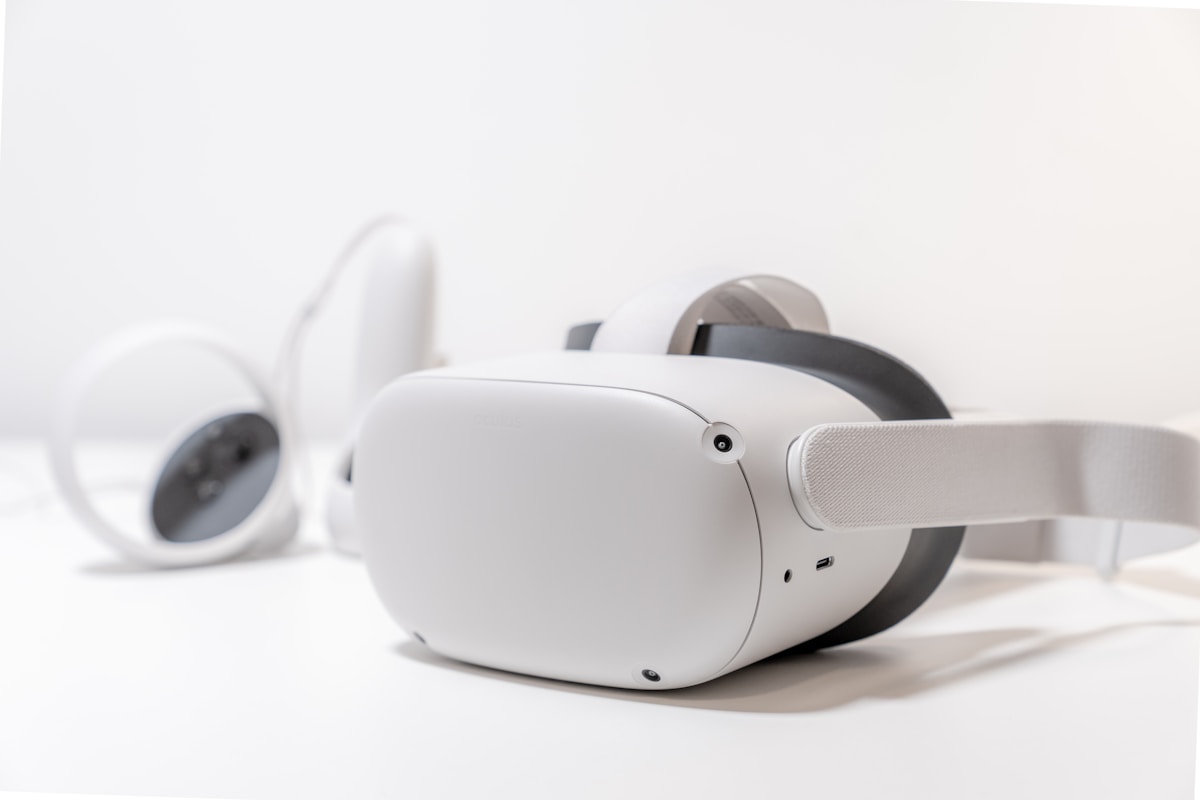
Meta's Quest 3 is a genuinely capable mixed reality headset at $499. The passthrough mixed reality enables both VR immersion and AR overlay, at a price that reaches beyond early adopters.
Meta's Ray-Ban AI glasses (without a visual display) have sold several million units — more than any AR glasses product before them. They demonstrate that the form factor of AI-enhanced eyewear has market demand at the right price point.
Meta's hardware roadmap points toward: AR glasses with a visual display as early as 2025 (Project Orion glasses demonstrated internally), progressively improving and price-declining Quest headsets, and the longer-term Hypernova glasses project for mainstream AR.
The consumer metaverse was the story that got told; the AR glasses strategy is the actual business being built.
Where Spatial Computing Is Going
2025–2027: Enterprise AR grows steadily. Apple Vision Pro 2nd-3rd generation improves hardware quality. Meta releases AR glasses with limited display capability. Quest hardware improves in quality-to-price ratio.
2027–2030: AR glasses with 4–6 hour battery life and acceptable form factor enter the market at $500–$1,000 price points. Spatial computing becomes a standard tool in specific professional domains (medicine, engineering, field service, architecture).
2030+: AR glasses approach smartphone form factors. Use cases expand from professional to consumer as price falls below $300. The concept of information overlay on physical space becomes familiar to mainstream users.
Further Reading
- How NASA Uses AI: Space Exploration in the Age of Artificial Intelligence
- AI in Healthcare 2025: What's Actually Saving Lives Right Now
- Self-Driving Cars in 2025: What's Actually Working and What Isn't
- Digital Twin Technology: How Virtual Copies of Everything Are Changing Industry
- The Future of Jobs in the AI Age: What's Safe, What's Threatened, and How to Adapt
- GPT-4 vs Claude vs Gemini: Which AI Model Is Best in 2025?
- Semantic Search Tutorial: Build Search That Understands Meaning, Not Just Keywords
- LLM Token Pricing Explained: How to Calculate and Minimize AI API Costs
Advertisement
💬 DiscussionPowered by GitHub Discussions
Frequently Asked Questions

AiTechWorlds Team
✓ Verified WriterThe AiTechWorlds team is passionate about AI, technology, and education. We create high-quality, research-backed content to help you learn, grow, and succeed in the modern digital world.
Advertisement
Related Articles

5G + AI: The Combination Powering the Next Wave of Innovation
5G and AI together are enabling applications neither can power alone. A clear look at real-world 5G + AI deployments in manufacturing, healthcare, autonomous vehicles, and smart cities.

AGI in 2025: Are We Closer Than We Think?
An honest assessment of AGI progress in 2025: where the leading labs actually stand, what benchmarks reveal and conceal, and how close we really are to artificial general intelligence.

The Rise of AI Agents: How Autonomous AI Is Changing Everything
AI agents are moving from demos to production in 2025. What AI agents actually are, how they're being deployed in real businesses, the risks nobody talks about, and where this technology is heading.

How AI Is Helping Solve Climate Change: Real Tools, Real Impact
AI's role in addressing climate change: the concrete applications in energy optimization, materials discovery, climate modeling, and carbon capture that are having measurable impact in 2025.