
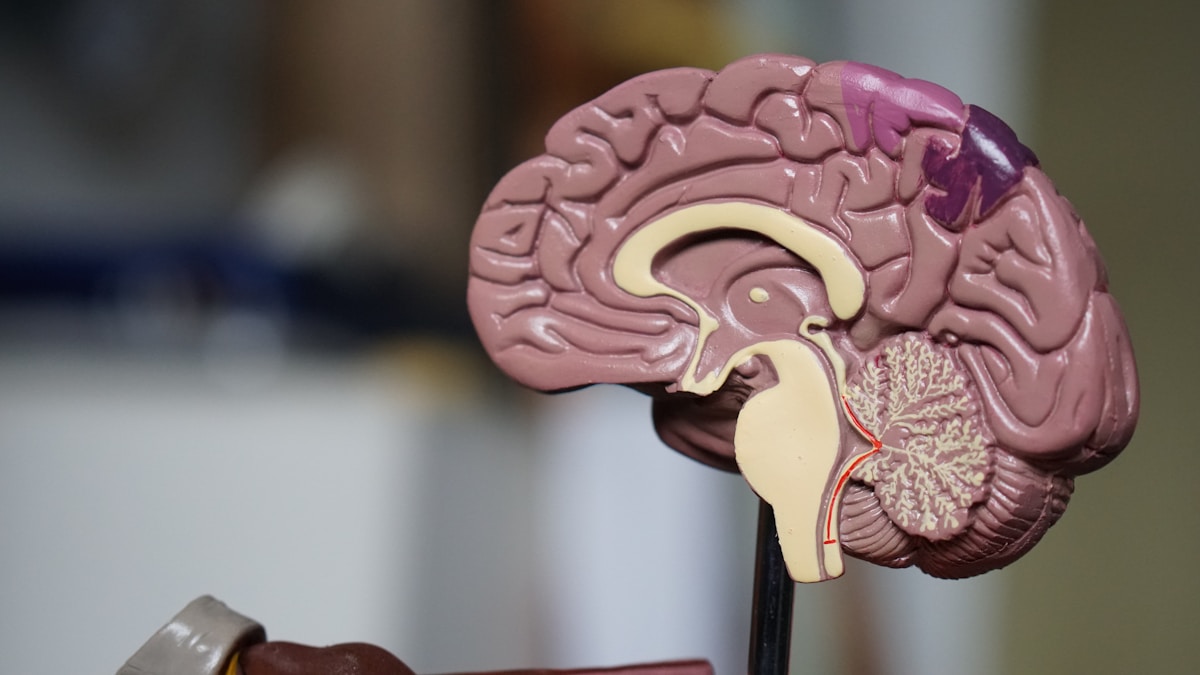
Brain-Computer Interfaces: Neuralink and the Future of Human Cognition
⚡ Quick Answer
An honest look at brain-computer interface technology in 2025: what Neuralink has achieved, what the clinical results actually show, the competing approaches, and what BCIs mean for human cognition long-term.
Get more content like this on Telegram!
Daily AI tips, notes & resources — free
Advertisement
Brain-Computer Interfaces: Neuralink and the Future of Human Cognition
When Neuralink's first human patient, Noland Arbaugh, demonstrated controlling a computer cursor with his thoughts in March 2024, the reaction split predictably: some called it the dawn of human enhancement, others dismissed it as overhyped. Both reactions missed the most important thing about that demonstration.
Arbaugh, paralyzed from the shoulders down after a diving accident, was playing online chess and streaming on Twitch using only his neural signals. He described it as "not fully functional" compared to before his injury — but the system worked. He could do things that prior technology didn't allow. For someone who had lost independent computer access for years, this wasn't a technology demonstration. It was a restoration of capability.
That's the context that matters for understanding brain-computer interfaces in 2025: we're in the early clinical phase of genuinely transformative medical technology. The cognitive enhancement narrative — "uploading your brain" or "becoming superhuman" — is a distraction from the real story, which is about restoring function to people who have lost it.
Here's what the technology actually is, what's been achieved, the competing approaches, and what the long-term trajectory looks like.
What Brain-Computer Interfaces Actually Do
A brain-computer interface creates a direct communication pathway between the brain and an external device. They divide into two categories:
Non-invasive BCIs (electroencephalography, EEG-based): Sensors on the scalp record electrical activity from millions of neurons. Resolution is low — you get patterns, not individual neuron signals. Used for basic applications: controlling simple interfaces, neurofeedback for focus and stress management, medical EEG diagnostics. No surgery required.
Invasive BCIs (implanted electrodes): Electrodes placed directly in brain tissue record individual neurons or small clusters. Resolution is dramatically higher, allowing decoding of specific intended movements. Requires surgery. Used for medical applications in paralyzed or locked-in patients.
Neuralink's N1 chip is at the high-end of invasive BCIs — more electrodes, better signal resolution, and fully wireless transmission compared to previous implanted BCIs like BrainGate (which required a transcutaneous connector, an actual cable through the skin).
The Competitive Landscape
Neuralink gets most of the coverage, but the BCI field is broader than one company:
BrainGate Consortium
Academic consortium (Brown University, Stanford, others) that pioneered the clinical demonstration of BCIs for motor restoration. Their Utah Array-based implants demonstrated computer control in paralyzed patients years before Neuralink's clinical trial. Their peer-reviewed publication record is the foundation of what we know about long-term BCI performance in humans.
Status: Clinical research, not commercial product. Decades of follow-up data.
Synchron
Endovascular BCI — the electrode array is delivered through a blood vessel into the brain, without open-brain surgery. Less invasive but lower signal resolution than cortically implanted electrodes.
Achievement: First FDA-cleared clinical trial of an endovascular BCI. Demonstrated computer control in paralyzed patients. Lower surgery risk than Neuralink's approach.
Paradromics
Focused on high-bandwidth neural interfaces for speech restoration. Higher electrode count than current competitors.
Precision Neuroscience
Founded by a former Neuralink executive. Ultra-thin cortical electrode arrays ("Precision Neural Interface") deployed via a minimally invasive procedure. Initial human demonstrations in 2023.
Nuro (formerly Kernel)
Bryan Johnson's company pivoting from implants to non-invasive TD-fNIRS (time-domain functional near-infrared spectroscopy) — a light-based non-invasive brain recording approach.
The competitive dynamic: Synchron's endovascular approach offers a compelling risk-benefit trade-off compared to cranial surgery — lower risk, somewhat lower performance. If long-term data shows endovascular BCIs achieve acceptable functionality, it could be the clinical path that scales while high-performance implants serve specialized cases.
What the Clinical Results Actually Show
The first Neuralink human implant (Noland Arbaugh, January 2024) produced several important data points:
Performance: Cursor control performance exceeded previous clinical BCI systems. Arbaugh achieved cursor positioning speeds and accuracy that enabled practical computer use.
Electrode degradation: Neuralink disclosed that some electrode threads retracted in the weeks following implant, reducing the number of active channels. The company attributed this to brain micromotion — the brain moves slightly with each heartbeat and breath, creating mechanical stress on the thin threads.
Functional outcome despite degradation: Despite reduced electrode count, functionality remained useful. Neuralink's software adapted by improving signal processing on remaining channels.
Subsequent implants: Neuralink has improved thread attachment methods in subsequent implants to address the retraction issue. Follow-up patients (as reported by the company) have shown better electrode stability.
What's missing: Peer-reviewed clinical data. Neuralink has published brief updates via blog posts and media demonstrations, but comprehensive clinical outcome data hasn't been published in peer-reviewed journals. The research community watches Neuralink closely but can't fully evaluate its results without independent publication.
The Medical Applications Pipeline
The clearest near-term value of BCIs is unambiguous:
Motor restoration: Paralyzed patients regaining computer control, eventually limb control via functional electrical stimulation (FES), where BCI signals trigger muscle stimulation to move paralyzed limbs. Clinical trials underway.
Communication for locked-in syndrome: Patients with ALS or brainstem stroke who can no longer speak or move can communicate through BCI-controlled typing. The BrainGate/Academic consortium has published multiple patient cases.
Treatment-resistant depression and OCD: Deep brain stimulation (an established, earlier BCI technology) treats Parkinson's disease and treatment-resistant depression by delivering electrical stimulation to specific brain regions. This is already an approved medical device in use.
Epilepsy management: Responsive neurostimulation devices (FDA-approved) detect seizure onset and deliver stimulation to abort seizures before they spread. Already in clinical use.
The medical roadmap is real and near-term. The challenge is the risk-benefit calculation for the rare patient conditions that justify brain surgery.
The Cognitive Enhancement Question
Media coverage consistently pushes toward the question: will BCIs make normal people smarter?
The honest assessment: not anytime soon, and "smarter" is the wrong framing.
The bandwidth problem: Human cognition involves roughly 86 billion neurons with 100 trillion synaptic connections. Neuralink's N1 chip records from ~1,024 electrodes. Even with significant electrode count increases, the recording bandwidth is a tiny fraction of brain activity. You can decode specific intended motor signals; you cannot decode the richness of thought.
The interface bottleneck: Reading from the brain is hard. Writing to it meaningfully is harder. The stimulation patterns that would "upload" information would need to precisely replicate the neural firing patterns that encode that information — we don't know how to do this at scale.
What might come first: AI-augmented memory assistance. A BCI that detects "memory encoding" neural states and prompts external AI to record and surface that information later. Not "downloading knowledge," but better-integrated external memory augmentation. This is plausible within 10–15 years.
What won't come in this generation: Skills uploading, dramatically enhanced processing speed, or the kind of cognitive augmentation depicted in science fiction. The brain is not a computer in the relevant sense, and BCIs are not USB ports.
The Ethical Dimensions
BCIs raise ethical questions that deserve serious consideration:
Neural data privacy: Brain signals, properly decoded, reveal intentions, emotions, and states far more intimate than any other data type. Who owns this data? Can it be subpoenaed? Can it be hacked? These aren't hypothetical questions — they require legal frameworks now, before large-scale deployment.
Informed consent and psychological dependency: Patients who regain function through BCIs may face difficult choices if a device fails or needs replacement. The dependency created by restoring function has psychological dimensions that clinical frameworks don't fully address.
Access equity: If cognitive enhancement BCIs become available, equitable access — or lack of it — could entrench social inequality far more deeply than current technological divides.
Military applications: Brain-computer interfaces for soldiers (faster threat detection, enhanced situational awareness) are being actively researched by DARPA and equivalent agencies in other countries. The ethics of military BCI deployment deserves more public discussion than it receives.
Identity and authenticity: If a BCI enhances your memory or reaction speed, is that "you"? These philosophical questions will become practical ones as the technology develops.
The 10-Year Trajectory
2025–2028: Neuralink and Synchron complete larger clinical trials. First BCI-powered robotic arm control for paralyzed patients demonstrates practical applications beyond computer interfaces. Speech decoding BCIs reach commercial viability for ALS patients. Non-invasive BCIs improve significantly through better signal processing.
2028–2033: First BCI devices for voluntary adoption by non-paralyzed patients in limited applications (e.g., people with severe tremors, early-stage ALS). Bidirectional BCIs (both reading from and writing to brain tissue) achieve clinical demonstrations for sensory feedback in prosthetics.
2033+: Potential expansion to broader voluntary use cases. Cognitive augmentation applications (externally-assisted memory enhancement, AI-integrated information retrieval) become viable as interface bandwidth improves.
Further Reading
- 5G + AI: The Combination Powering the Next Wave of Innovation
- Web3 Meets AI: How Blockchain and Artificial Intelligence Are Converging
- AGI in 2025: Are We Closer Than We Think?
- How NASA Uses AI: Space Exploration in the Age of Artificial Intelligence
- Self-Driving Cars in 2025: What's Actually Working and What Isn't
- NLP for Beginners: How Computers Learn to Understand Language
- AI API Cost Management: How to Cut LLM Costs by 80% Without Losing Quality
- RAG System Tutorial: Build a Production Retrieval-Augmented Generation System
Advertisement
💬 DiscussionPowered by GitHub Discussions
Frequently Asked Questions
AiTechWorlds Team
✓ Verified WriterThe AiTechWorlds team is passionate about AI, technology, and education. We create high-quality, research-backed content to help you learn, grow, and succeed in the modern digital world.
Advertisement
Related Articles

5G + AI: The Combination Powering the Next Wave of Innovation
5G and AI together are enabling applications neither can power alone. A clear look at real-world 5G + AI deployments in manufacturing, healthcare, autonomous vehicles, and smart cities.
AGI in 2025: Are We Closer Than We Think?
An honest assessment of AGI progress in 2025: where the leading labs actually stand, what benchmarks reveal and conceal, and how close we really are to artificial general intelligence.

The Rise of AI Agents: How Autonomous AI Is Changing Everything
AI agents are moving from demos to production in 2025. What AI agents actually are, how they're being deployed in real businesses, the risks nobody talks about, and where this technology is heading.

How AI Is Helping Solve Climate Change: Real Tools, Real Impact
AI's role in addressing climate change: the concrete applications in energy optimization, materials discovery, climate modeling, and carbon capture that are having measurable impact in 2025.