
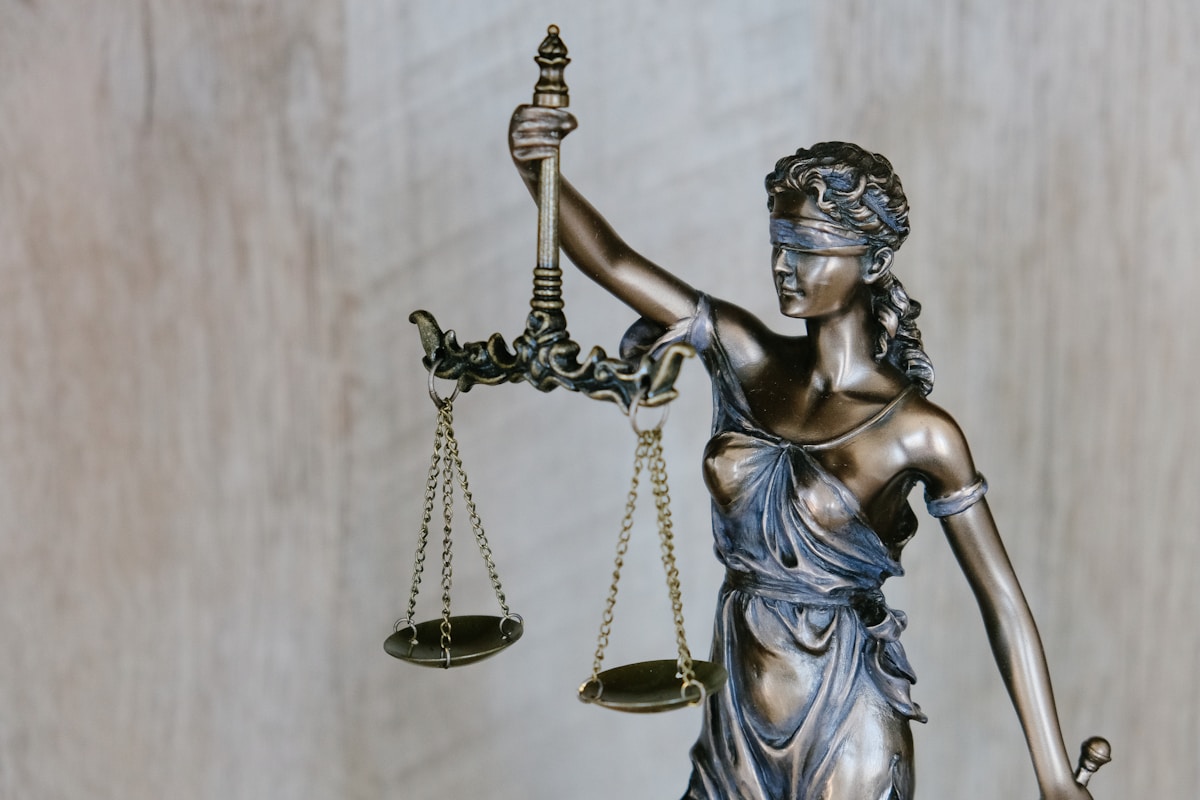
ChatGPT for Lawyers: How Legal Professionals Use AI Ethically
⚡ Quick Answer
Lawyers use ChatGPT for first-draft documents, plain-language summaries, and client communication — never for unverified research. It hallucinates fake case citations, so verify every cite in Westlaw or LexisNexis and keep client data out of consumer tools.
Get more content like this on Telegram!
Daily AI tips, notes & resources — free
Advertisement
ChatGPT for Lawyers: How Legal Professionals Use AI Ethically
The legal profession's relationship with AI is accelerating faster than most bar associations' guidance can keep up with.
I've spoken with attorneys at small firms, large firms, and solo practices about how they're using AI tools in their practice. The consistent finding: lawyers who use AI thoughtfully are increasing their productivity significantly. Lawyers who use AI carelessly are creating risk — including the documented cases of attorneys sanctioned for submitting AI-generated briefs with fake citations.
This guide covers what responsible AI use in legal practice looks like — the tasks that work, the ones that don't, and the ethical framework that should govern both.
The Cases That Defined the Conversation
Before the practical guidance: you should know about the cases that set the current stakes.
In 2023, attorneys in multiple high-profile cases submitted briefs citing cases that didn't exist — generated by ChatGPT. In one widely covered case, a New York attorney was sanctioned and faced significant consequences after his ChatGPT-generated brief contained fabricated case citations presented as real.
These aren't outliers. They reflect what happens when AI is used for legal research without verification — and why the legal profession has developed specific guidance about how and when to use AI.
The lesson: ChatGPT is useful for many legal tasks and genuinely dangerous for others.
Appropriate Uses: Where AI Adds Value in Legal Practice
1. Document Drafting (First Drafts)
ChatGPT produces serviceable first drafts of standard legal documents:
NDAs:
You are a transactional attorney. Draft a mutual NDA for a business situation where two companies are exploring a potential acquisition. Standard terms: 2-year duration, standard confidentiality obligations, carve-outs for publicly available information and prior knowledge. Include: purpose clause, definition of Confidential Information, obligations of receiving party, exclusions, term and termination, governing law placeholder, and signature block. Note: this is a first draft for attorney review, not final legal advice.
Employment Agreements:
Draft an at-will employment agreement template for a [state placeholder] technology company hiring a full-time software engineer. Include standard provisions for: at-will employment, compensation and benefits placeholders, IP assignment, confidentiality obligations, non-solicitation (check enforceability in [state]), dispute resolution (arbitration clause optional), and governing law. Flag any provisions that require jurisdiction-specific review.
Client Intake Letters:
Write a client intake letter for a personal injury law firm confirming representation of [Client Name] in connection with [matter description]. Include: scope of representation, fee arrangement placeholder (contingency/hourly), client responsibilities, communication expectations, and standard disclaimers.
Key practice: Always review AI-drafted documents for accuracy, jurisdiction-specific requirements, and client-specific needs. AI drafts are starting points for attorney work, not finished products.
2. Plain-Language Document Summaries
One of the highest-value, lower-risk applications: explaining complex documents in plain language for clients.
Summarize this 15-page commercial lease in plain language for a small business owner who has no legal background. Cover: rent amount and escalations, lease term, renewal options, permitted uses, tenant improvement allowance, early termination provisions, and the landlord's rights of entry. Note any provisions that seem particularly favorable or unfavorable to the tenant. [paste document]
This is appropriate because: you (the attorney) have read and understand the document; you're using AI to communicate your analysis in accessible language; you'll review the summary before sending.
3. Legal Research Organization (Not Primary Research)
ChatGPT can help organize and structure legal research — not replace it.
Topic frameworks:
I'm researching defenses available to a defendant in a breach of contract case in [state]. Create a framework of the most commonly recognized affirmative defenses with a brief description of each. I'll verify the specific elements and applicable cases in Westlaw.
Issue spotting:
I'm reviewing a commercial services agreement. Generate a checklist of common issues to review in this type of contract, organized by section type. I'll use this as a review framework — not as legal advice.
Drafting research memos:
Using only the research I've provided below [paste verified research], draft a memo analyzing [legal issue] under [state] law. Cite only the sources I've provided. Do not add any additional case citations — I need to verify all sources.
This last instruction — "Do not add any additional case citations" — is the critical safeguard for any legal research task.
4. Client Communication
Standard client communication tasks are low-risk and high-value:
Status update letters:
Draft a status update letter to a client in a personal injury case explaining that we've submitted a demand letter to the other party's insurer and are awaiting their response. Typical timeline: 30-60 days for a response. Tone: professional but accessible, no jargon. Client's name: [placeholder].
Request for documents:
Draft a letter to a client requesting the following documents for their estate planning matter: [list documents]. Explain why each document is needed. Deadline: 2 weeks. Enclose a self-addressed envelope option and offer to schedule a call if they have questions.
5. Administrative and Operational Tasks
Tasks unrelated to practicing law carry no ethical risk:
- Meeting agendas and follow-up action items
- Time entry descriptions (based on notes you provide)
- Marketing content for the firm's website
- Job postings and HR communications
- CLE program outlines and materials
Inappropriate Uses: Where AI Creates Risk
1. Unverified Legal Research
Never cite a case, statute, or regulation that came from ChatGPT without independent verification through a primary legal database. ChatGPT will generate plausible-sounding citations that don't exist.
Rule: If it comes from AI, verify it. No exceptions.
2. Jurisdiction-Specific Legal Advice
ChatGPT doesn't reliably know jurisdiction-specific rules. A document that works in one state may be unenforceable in another. An AI that says "this is the rule" may be wrong about your specific jurisdiction.
3. Uploading Client Confidential Information to Consumer AI Tools
OpenAI's consumer-facing ChatGPT may use conversations to improve models. Uploading confidential client documents to the consumer ChatGPT interface likely violates client confidentiality obligations.
Alternative: Use ChatGPT Enterprise (which has data privacy agreements) or legal-specific AI tools with proper data governance.
Ethical Framework: What Bar Associations Say
Most US state bars and the ABA have issued guidance on AI use:
Competence (Rule 1.1): Lawyers must understand the tools they use. Using AI without understanding its limitations — including hallucination — fails this obligation.
Confidentiality (Rule 1.6): Client data in consumer AI tools creates confidentiality risk. Enterprise tools with proper data agreements address this.
Supervision (Rule 5.3): Lawyers must supervise non-lawyer work, including work done with AI tools. AI output isn't reviewed just once — it's the lawyer's responsibility.
Candor to the court (Rule 3.3): Submitting AI-generated content with false citations is a candor violation, as the sanctioned attorneys found.
Further Reading
- How to Create a ChatGPT Bot for Your Website (Step by Step)
- How to Use ChatGPT Code Interpreter for Data Visualization
- ChatGPT API Tutorial: Build Your First AI-Powered App in 1 Hour
- 20 ChatGPT Prompts for E-commerce Product Descriptions
- ChatGPT for YouTube Scripts: From Idea to Viral Video
- 5 Free AI Tools to Clean Up Noisy Audio (Remove Hiss, Echo, Wind)
- Fine-Tuning LLMs: When to Do It and How to Do It Right
- 10 Free AI Music Generators for Videos and Podcasts (2026)
Advertisement
💬 DiscussionPowered by GitHub Discussions
Frequently Asked Questions

AiTechWorlds Team
✓ Verified WriterThe AiTechWorlds team is passionate about AI, technology, and education. We create high-quality, research-backed content to help you learn, grow, and succeed in the modern digital world.
Advertisement
Related Articles

10 Advanced ChatGPT Prompting Techniques (Chain of Density and More)
Master advanced ChatGPT prompting with Chain of Density, Chain of Thought, Tree of Thoughts, role stacking, and 6 more expert techniques with real examples.
How to Avoid ChatGPT Hallucinations in Research and Writing
Learn 7 practical techniques to avoid ChatGPT hallucinations in academic research, with a verification workflow, tools, and honest limits you need to know.
7 ChatGPT Plugins That Save 10 Hours Weekly
The best ChatGPT plugins and GPTs in 2026 for freelancers. Real use cases, honest time estimates, and which ones actually deliver results.

ChatGPT for Academic Research: Citations and Summaries
ChatGPT as a research assistant for students and academics: literature review prompts, citation formatting, summarization workflows, and critical hallucination warnings.