
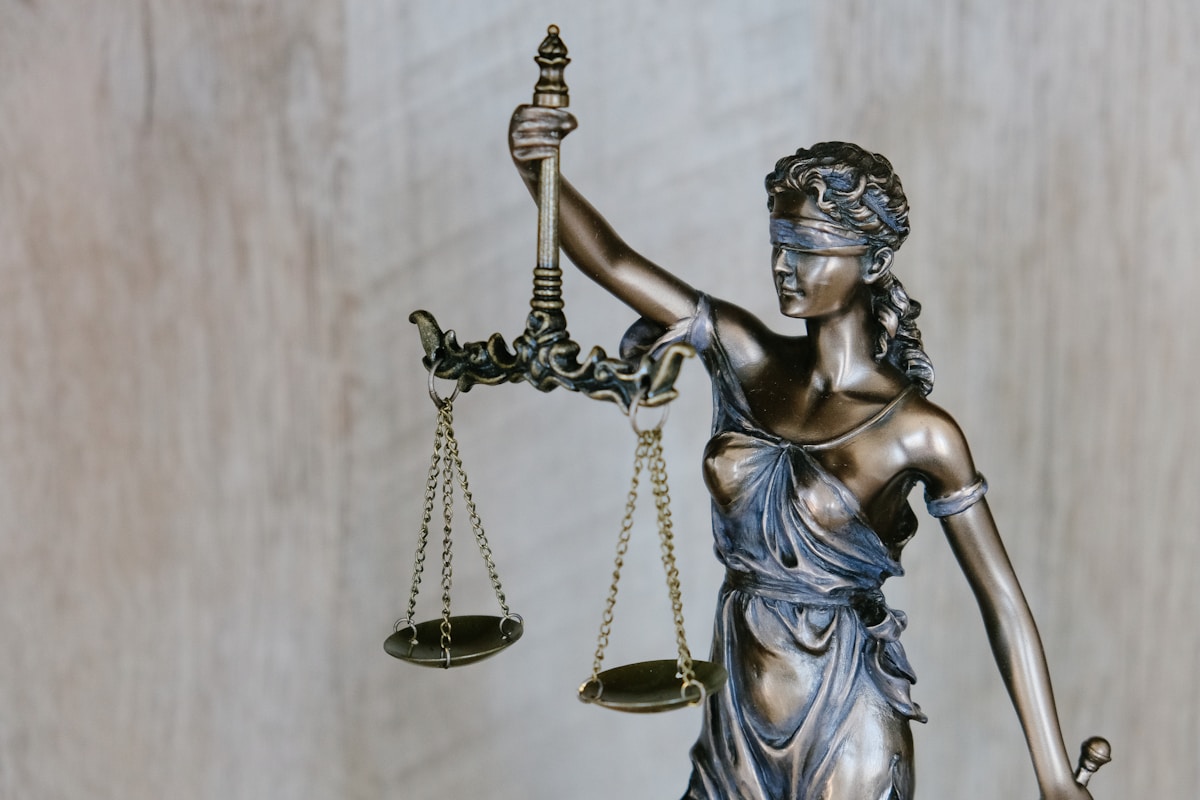
ChatGPT for Legal Documents: Templates and Important Warnings
⚡ Quick Answer
ChatGPT drafts standard legal documents (NDAs, freelance contracts, templates) and helps you understand what a document should contain — but it isn't a lawyer. Every draft needs attorney review before you rely on it for anything that carries real consequences.
Get more content like this on Telegram!
Daily AI tips, notes & resources — free
Advertisement
I want to start with the warning instead of burying it at the end.
ChatGPT is not a lawyer. It has not passed the bar in any jurisdiction. It cannot give you legal advice, cannot account for your specific circumstances in a legally meaningful way, and cannot be held responsible if the document it drafts fails to protect you. The prompts in this article will produce useful draft documents — but every one of them needs human review before you rely on it for anything important.
That said: AI-assisted legal drafting is genuinely useful for legal assistants, small business owners, freelancers, and anyone who needs to understand what a standard document should contain before talking to an attorney. Used correctly, it saves time and reduces the "I don't even know what to ask" problem that makes legal work expensive.
Here are eight document types where ChatGPT can meaningfully help, along with the prompts and the caveats specific to each.
What ChatGPT Can Legitimately Do for Legal Work
Before the prompts: let me be specific about where AI is actually useful in legal document work.
Drafting first versions of standard documents based on well-established templates. Most NDAs, simple service agreements, and basic freelance contracts follow predictable structures that ChatGPT knows well.
Explaining what specific clauses mean in plain English. Lawyers write in legalese; ChatGPT can explain what you're agreeing to.
Helping you identify what provisions a contract should include for your situation. You may not know that an IP assignment clause matters for your freelance work until you ask.
Organizing your terms so you can present them clearly to an attorney. Arriving with a structured draft is more efficient than starting from a blank sheet in a billable hour.
For broader context on how AI handles professional document tasks, our ChatGPT prompt bible covers prompt structures that work well for professional drafting.
8 Legal Document Prompts With Warnings
1. Non-Disclosure Agreement (NDA)
Prompt: "Draft a mutual non-disclosure agreement between two parties exploring a business partnership. Include: definition of confidential information, exclusions from confidentiality, obligations of each party, permitted disclosures, term of agreement (3 years), and governing law clause (leave jurisdiction blank for me to fill in). Standard business NDA, not trade secret-specific."
What you get: A solid draft covering the standard NDA provisions used in most business contexts.
Warning: One-sided vs. mutual NDAs matter. Aggressive confidentiality definitions can be unenforceable. Trade secret protections under the Defend Trade Secrets Act (US) require specific language. Have an attorney review before using with a valuable business relationship.
2. Freelance Service Agreement
Prompt: "Draft a freelance service agreement for a graphic designer providing logo and brand identity services. Include: scope of work, payment terms, revision rounds (3 included), IP ownership (client owns final deliverables, designer retains portfolio rights), kill fee (50% if project cancelled mid-work), confidentiality, and dispute resolution clause. Plain but professional language."
What you get: A working freelance contract covering the main provisions designers and clients negotiate.
Warning: IP ownership clauses vary significantly by jurisdiction and profession. Work-for-hire provisions under US copyright law have specific requirements. If you're doing ongoing work with a major client, a one-page template is insufficient — get it reviewed.
3. Independent Contractor Agreement
Prompt: "Draft an independent contractor agreement for a marketing consultant working with a startup on a project basis. Cover: independent contractor status (not employee), scope of services, compensation and invoicing terms, confidentiality, intellectual property assignment, non-solicitation (12 months post-engagement), and termination provisions. US-focused."
What you get: A standard contractor agreement addressing the classification issues that commonly cause problems.
Warning: Worker classification is legally significant. An agreement that calls someone a contractor doesn't make them one if the working relationship functions like employment. Misclassification has real tax and legal consequences. This is one area where attorney review is particularly important.
4. Website Terms of Service
Prompt: "Draft website terms of service for a small e-commerce store selling handmade goods. Include: acceptance of terms, use restrictions, product and pricing information, order acceptance policy, returns and refunds, limitation of liability, governing law, and contact information placeholders. Consumer-friendly language, not hostile fine print."
What you get: A reasonable terms of service covering the main provisions courts look for.
Warning: E-commerce terms need to comply with consumer protection laws in the jurisdictions where you sell, which vary substantially between US states, the EU (GDPR), UK, and other regions. GDPR compliance alone requires specific provisions that a generic prompt won't cover. If you sell internationally, specialist review is important.
5. Privacy Policy
Prompt: "Draft a privacy policy for a small business website that collects: name, email, and payment information via checkout. The business uses Google Analytics and an email marketing service. Describe: what data is collected, how it's used, who it's shared with, user rights, cookies, data retention, and contact information for privacy requests. Plain language."
What you get: A standard privacy policy framework covering common provisions.
Warning: Privacy law is one of the fastest-changing areas of law, and jurisdiction requirements differ dramatically. GDPR (EU), CCPA/CPRA (California), PIPEDA (Canada), and other frameworks each have specific requirements. A generic privacy policy that doesn't address your users' specific jurisdictions is a compliance risk. This is not the place to rely solely on AI drafting.
6. Letter of Intent (LOI)
Prompt: "Draft a non-binding letter of intent for a business acquisition. The buyer is interested in acquiring a small SaaS company for an estimated purchase price of [X]. Cover: deal structure (asset purchase), price range, due diligence period (45 days), exclusivity period (30 days), non-binding nature of the LOI except for exclusivity and confidentiality provisions, and expiration date."
What you get: A solid LOI framework that covers the standard provisions used in early-stage acquisition discussions.
Warning: The binding vs. non-binding distinction in LOIs is genuinely complex. Courts have found certain LOI provisions binding even when the document says otherwise. The exclusivity clause in particular is typically binding and has real legal effect. M&A attorney involvement from the LOI stage is standard practice for a reason.
7. Demand Letter
Prompt: "Draft a demand letter from a freelancer to a client who has not paid an invoice of $3,500 for completed web design work. The project was completed 60 days ago, payment was due net 30. The letter should: state the amount owed and services completed, reference the contract or agreement, provide a 10-day deadline for payment, and mention that failure to pay may result in legal action. Professional, firm, not threatening."
What you get: A clear, usable demand letter that matches standard practice.
Warning: Demand letters can be used as evidence if litigation follows. Statements that are inaccurate, overly aggressive, or that imply specific legal threats you can't follow through on can hurt your position. Have an attorney review the letter if the amount is substantial or the situation is complex.
8. Contractor IP Assignment
Prompt: "Draft a standalone intellectual property assignment clause suitable for adding to a contract. The clause should assign all work product created by a contractor during the engagement to the hiring company, including any pre-existing IP incorporated into the work (with a carve-out for clearly defined pre-existing tools). Cover: present and future assignment, moral rights waiver where applicable, and cooperation in formal assignment if required."
What you get: A solid IP assignment clause that covers the main concerns.
Warning: IP assignment clauses that are too broad can be unenforceable. In some jurisdictions (California, notably), certain employee/contractor IP provisions have statutory limits. The moral rights waiver provision varies significantly by country. Review before including in contracts with meaningful IP value.
How to Use These Drafts Responsibly
The most useful application I've found: use ChatGPT to create a first draft that you then bring to an attorney for review. You've done the preliminary structuring work, which means the attorney spends less billable time creating from scratch. They focus on jurisdiction-specific adjustments, enforceability issues, and the provisions your specific situation requires.
For smaller matters — a simple freelance agreement for a $500 project, an NDA for early-stage conversations — the AI draft may be sufficient with a careful read and customization of the key provisions. As the stakes increase, so does the importance of attorney review.
The American Bar Association's guidance on AI in legal practice is worth reading if you work in or adjacent to the legal field and want to understand how the profession is thinking about AI-generated content.
For legal assistants working under attorney supervision, these prompts can significantly reduce the time spent on first drafts of routine documents — which is exactly the legitimate use case they're suited for.
Our prompt engineering guide has techniques for refining the outputs from these legal prompts when the first version needs adjustment.
One More Important Warning
ChatGPT's legal knowledge has a training cutoff. Laws change. Courts issue new rulings. Regulations are updated. Anything involving a recent legal development — new privacy regulations, recent changes in employment law, updates to specific statute requirements — needs to be verified against current sources. Do not assume that AI-generated legal language reflects the most current state of the law.
For the categories that change fastest (privacy law, employment classification, tax provisions), treat AI-generated content as a structural starting point only, and verify every jurisdiction-specific provision independently.
Further Reading
Advertisement
💬 DiscussionPowered by GitHub Discussions
Frequently Asked Questions

AiTechWorlds Team
✓ Verified WriterThe AiTechWorlds team is passionate about AI, technology, and education. We create high-quality, research-backed content to help you learn, grow, and succeed in the modern digital world.
Advertisement
Related Articles

10 Advanced ChatGPT Prompting Techniques (Chain of Density and More)
Master advanced ChatGPT prompting with Chain of Density, Chain of Thought, Tree of Thoughts, role stacking, and 6 more expert techniques with real examples.
How to Avoid ChatGPT Hallucinations in Research and Writing
Learn 7 practical techniques to avoid ChatGPT hallucinations in academic research, with a verification workflow, tools, and honest limits you need to know.
7 ChatGPT Plugins That Save 10 Hours Weekly
The best ChatGPT plugins and GPTs in 2026 for freelancers. Real use cases, honest time estimates, and which ones actually deliver results.

ChatGPT for Academic Research: Citations and Summaries
ChatGPT as a research assistant for students and academics: literature review prompts, citation formatting, summarization workflows, and critical hallucination warnings.