
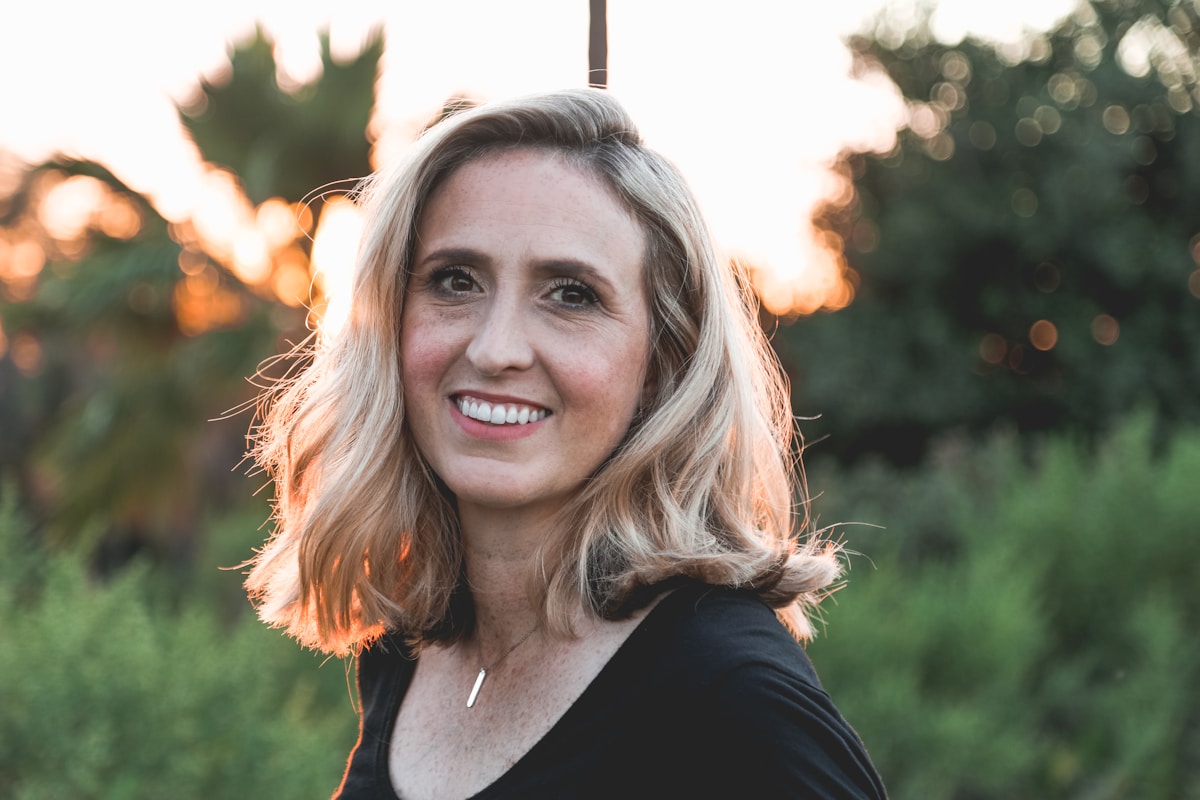
Best AI for Generating Realistic Human Faces (That Don't Look Creepy)
⚡ Quick Answer
Find the best realistic AI face generator for marketing and design work. Compare Midjourney, DALL-E, Stable Diffusion, and TPDNE with realism scores and prompt tips.
Get more content like this on Telegram!
Daily AI tips, notes & resources — free
Advertisement
There's a scene in almost every AI image generation story where someone generates their first realistic human face and spends a full minute staring at it. The technical achievement is striking. Then they spot it — something in the eyes, or a tooth that's slightly too perfect, or an ear that doesn't quite connect to the skull correctly. Welcome to the uncanny valley, population: everyone who's ever tried to use a realistic AI face generator for actual work.
The gap between "technically realistic" and "convincingly human" is narrow but significant for marketing and design work. A face that's 95% convincing but 5% wrong distracts viewers and undermines the credibility of the material it appears in. The question isn't just which AI generates realistic faces — it's which AI generates faces that clear the uncanny threshold consistently enough to be usable without an art director flinching.
In 2026, the answer is more nuanced than it was two years ago. Midjourney v6 and DALL-E 3 both produce genuinely impressive portraits. Stable Diffusion with specialized portrait models competes well. And for applications where you just need a realistic face without caring about identity, There's a service that's been generating perfect-looking strangers for years.
The Uncanny Valley Problem in AI Faces
The uncanny valley is a hypothesis proposed by roboticist Masahiro Mori in 1970 — as a robot or artificial representation gets closer to human appearance without fully matching it, our comfort drops sharply before rising again if the simulation is essentially perfect. The term now describes that slightly-wrong feeling AI faces often produce.
For AI-generated faces specifically, the common failure points are:
Eyes — reflections that don't match between left and right, irises that are slightly different sizes, or the "dead eye" effect where the specular highlight positions suggest no light source makes physical sense.
Teeth — either too uniform and white (which reads as fake even when technically plausible) or merged teeth where the gaps are painted rather than structural.
Ears — one of the most frequently ignored elements in training data discussion, ears are complex shapes that AI models still struggle to generate consistently, especially when partially obscured by hair.
Skin texture — skin that's too uniform in pore size and distribution looks prosthetic. The natural micro-variation of real skin — slightly different texture around eyes, chin, and forehead — is often absent.
Symmetry — human faces are naturally asymmetric. Over-symmetric AI faces read as artificial even to viewers who couldn't name why.
The best realistic AI face generators in 2026 have largely solved the most obvious issues. The failures that remain require closer inspection to notice — which is often good enough for thumbnail-sized application use but not for full-page print advertising.
The Tools
Midjourney v6
Midjourney v6 is my default recommendation for realistic portrait generation. The model's training data and attention mechanism produce faces with consistent, natural-looking skin texture, mostly convincing eye reflections, and good diversity across the demographic range you can prompt for.
The portrait-specific parameters available in v6 — --style raw for less stylization, --cref for character consistency across images — make it genuinely useful for creating consistent characters across a marketing campaign rather than one-off portraits.
A realistic face prompt in Midjourney doesn't need to be complex: "Portrait of a 35-year-old Japanese woman, natural light from camera left, shallow depth of field, Canon 85mm f/1.4, warm skin tones, direct gaze, unretouched, real photograph" produces remarkably convincing results.
Limitations: ears and peripheral hair detail occasionally fail on close inspection. Midjourney is a paid service — no meaningful free tier for consistent portrait work.
DALL-E 3 (via ChatGPT)
DALL-E 3 produces clean, well-composed portrait images with good commercial viability. The style leans slightly toward polished photography rather than raw naturalism — skin tones are handled well, eye detail is generally convincing, and the architectural framing of portraits is consistently professional.
Where DALL-E 3 excels over Midjourney for commercial work is predictability. The output is more consistent across runs on the same prompt, which matters when you need multiple portrait options that feel like they're from the same photoshoot. The explicit commercial rights from OpenAI's terms also resolve licensing ambiguity for paid client work.
DALL-E 3 is more conservative about generating faces in unusual situations — some prompts that Midjourney handles without issue will trigger safety filtering. For standard marketing and advertising portraits, this rarely matters.
This Person Does Not Exist
This Person Does Not Exist (TPDNE) uses StyleGAN3 to generate a new photorealistic face every time you visit the page or refresh. The faces are extraordinary — pore-level detail, accurate lighting, consistent anatomy. Many outputs would fool a casual viewer into thinking they're looking at a real photograph.
The limitations are significant: you have zero control. You get a random face each time. You cannot specify age, gender, ethnicity, expression, or style. The images may not be used commercially under the site's current terms (check before use). And there have been documented cases of generated faces closely resembling real individuals — a concern for any commercial application.
For reference gathering, mood boarding, or understanding what modern GAN-based face generation is capable of, TPDNE is fascinating. For anything requiring repeatability or specific demographics, look elsewhere.
Stable Diffusion (with Portrait Models)
Base SDXL produces decent portraits but specialized portrait fine-tuned models dramatically improve results. Models like Realistic Vision and epiCRealism (available on Civitai and similar repositories) are specifically trained for photorealistic human faces and produce results that compete directly with Midjourney on portrait quality.
The advantage is control and cost — Stable Diffusion runs locally for free, you can specify every aspect of the generation, and ControlNet can be used to control head pose and expression. The disadvantage is setup complexity and the quality variability between models.
For marketers and designers who don't want a technical setup, this isn't the right path. For those who don't mind the investment, the level of control — especially with ControlNet for consistent character positioning — is unmatched.
Comparison Table: Realistic AI Face Generators 2026
| Tool | Realism Score (1-10) | Control Level | Commercial Use | Free Tier | Best For |
|---|---|---|---|---|---|
| Midjourney v6 | 8.5 | Good (prompts + params) | Paid subscribers only | None | Marketing campaigns, creative work |
| DALL-E 3 | 8.0 | Good (prompts + uploads) | Yes (OpenAI terms) | Limited (ChatGPT) | Commercial advertising, predictable output |
| This Person Does Not Exist | 9.0 | None (random) | No (check terms) | Yes | Reference/mood boarding only |
| Stable Diffusion + portrait models | 8.5 | Excellent | Generally yes (check model terms) | Yes (local) | Maximum control, iterative work |
Realism score based on human evaluator testing at standard web display sizes (1080px). Close-inspection score would be lower for all tools.
Prompt Tips for Natural-Looking Faces
The difference between an AI portrait that looks like a stock photo and one that looks like a real photograph often comes down to prompting for imperfection and specificity.
Specify realistic lighting, not perfect lighting. "Natural window light" produces more convincing results than "studio lighting, perfectly lit." Real photos have slight shadows, ambient bounce, imperfect exposure.
Reference film and camera type. "Kodak Portra 400, 35mm film, slight grain" or "Sony A7IV, 85mm f/1.8, shallow depth of field" anchors the output in photographic reality rather than digital perfection.
Include minor imperfections. "Natural skin, visible pores, no retouching" signals to the model not to over-smooth the skin. This is counterintuitive — you'd think asking for high quality would help — but explicit permission for imperfection produces more realistic results.
Specify the situation, not just the face. "Woman reading at a café table, candid shot, unaware of camera, natural expression" produces more natural facial expressions than "portrait of a woman, looking at camera, smiling."
Add ambient context. Background elements — even blurred ones — ground the face in a spatial reality that makes the portrait more convincing. A completely neutral background registers as a studio shot, which some viewers read as stock photo.
For examples of how these principles apply across different portrait types, Midjourney vs DALL-E 3 includes portrait-specific comparisons.
Ethical Use of AI-Generated Faces
This section matters. Realistic AI face generation is one of the more ethically complex areas of AI image generation, and the applications range from clearly fine to clearly problematic.
Acceptable uses include: marketing photography for products, services, or content where no real model was used and no misrepresentation is intended; character development for fiction, games, or film; reference imagery for human anatomy drawing practice; UX design mockups.
Ethically problematic uses include: creating fake social media profiles (regardless of stated purpose); generating faces that impersonate real individuals; creating imagery designed to deceive viewers about the identity of a speaker or subject; using AI faces in contexts where the audience reasonably expects a real person.
Legally risky uses include: using generated faces in advertising without proper licensing verification; generating faces of identifiable real people for defamatory purposes; using faces without checking whether StyleGAN-based outputs resemble real identifiable individuals.
The AI art ethics guide covers the broader framework for thinking about these questions. For commercial work, getting clear legal guidance on your specific use case is worth the time investment — the regulatory environment around AI-generated likenesses is evolving rapidly.
According to a 2025 Reuters Institute report, 71% of surveyed adults in the UK and US expressed concern about AI-generated human faces being used in political advertising and news contexts — a concern that's driving regulatory attention in multiple jurisdictions.
Practical Applications for Marketers and Designers
Diverse representation in marketing materials. Generating faces for diverse representation across demographics is one of the most cited practical applications. The ability to specify age, apparent ethnicity, and expression without requiring demographic-matched model hiring has real production advantages. The ethical dimension — ensuring AI-generated diversity isn't a substitute for actual diverse hiring in broader contexts — is worth your awareness.
Consistent character libraries. Midjourney's --cref parameter and Stable Diffusion's LoRA fine-tuning can produce a character who appears consistently across multiple generated scenes — useful for brand mascots, fictional spokespeople, or recurring characters in content marketing.
Product photography models. For small e-commerce operations that can't afford model photography, AI faces for product-on-model imagery represent a significant cost reduction. The commercial acceptability of this use varies by platform and industry.
See best AI image generators 2026 for a broader toolkit that covers product photography applications alongside portrait generation.
Conclusion
Realistic AI face generation in 2026 is genuinely impressive and practically useful — but "impressive" and "usable without uncanny valley issues" aren't always the same thing. Midjourney v6 and DALL-E 3 clear the usability threshold for most commercial applications at standard display sizes. This Person Does Not Exist produces technically superior individual images but offers no practical control. Stable Diffusion with portrait models gives maximum control at the cost of setup investment.
For most marketers and designers starting out, DALL-E 3 offers the best combination of quality, commercial clarity, and ease of use. For those willing to invest time in setup, Stable Diffusion with ControlNet and a quality portrait model gives you the most control over output.
Whichever tool you use, prompt for imperfection, specify real photographic conditions, and check the outputs at the size and context they'll actually be seen in — not just at 100% zoom where every artifact is visible. Most AI portrait failures aren't visible in real use contexts.
Start a free ChatGPT account today and generate a few portrait prompts using the tips in this guide — you may be surprised how quickly useful output appears.
Further Reading
- Adobe Firefly Review: Is It Worth It for Creative Professionals?
- How to Create AI-Generated Album Cover Art (Free Tools 2026)
- Playground AI Review: Why Designers Love This Free Tool
- 10 Best Free AI Tattoo Design Generators (Custom Ink 2026)
- 10 Best AI Tools for Fashion Design and Clothing Mockups (2026)
Advertisement
💬 DiscussionPowered by GitHub Discussions
Frequently Asked Questions

AiTechWorlds Team
✓ Verified WriterThe AiTechWorlds team is passionate about AI, technology, and education. We create high-quality, research-backed content to help you learn, grow, and succeed in the modern digital world.
Advertisement
Related Articles
How to Create AI-Generated Album Cover Art (Free Tools 2026)
Learn how to create AI album cover art for free using top tools in 2026. Genre-specific prompts, Spotify specs, and real tool comparisons inside.
5 AI Image Generators Specialized in Anime Style (2026)
Find the best AI anime generator for 2026. Compare NovelAI, Waifu Diffusion, Leonardo, and more with real accuracy tests and free tier details.
How to Generate Architectural Renders With AI (No CAD Required)
Create stunning AI architectural rendering without CAD software in 2026. Compare Midjourney, Veras, and more with real workflow steps and cost breakdowns.
How to Generate AI Art in Different Styles (Cubism, Impressionism, More)
Master AI art style transfer with 15 art movement modifiers for Impressionism, Cubism, Surrealism, and more — with tool comparison and art history context.